A king-size bedroom set isn’t just furniture, it’s an investment in how you sleep and how your bedroom functions day to day. Whether you’re starting from scratch or upgrading tired, mismatched pieces, choosing the right king bedroom set means thinking beyond aesthetics. You need to consider durability, layout, material quality, and how the pieces work together in your space. This guide walks you through what makes a quality set, what components matter, and how to pick materials that’ll last years, not seasons. By the end, you’ll know exactly what to look for and how to avoid costly mistakes.
Table of Contents
ToggleKey Takeaways
- A quality king bedroom set balances solid wood joinery, reinforced construction, and timeless design to provide 10-15 years of durability versus budget alternatives that may last only 5-7 years.
- King bedroom set components include a sturdy bed frame with center support, nightstands at mattress height (24-28 inches), and a 48-60 inch dresser with full-extension drawers for optimal functionality and storage.
- Solid hardwoods like oak and walnut are durable and repairable, while engineered wood with thick veneers offers a budget-friendly middle ground—avoid thin veneers glued to particle board.
- Material selection matters: choose performance fabrics rated for 100,000+ double-rubs in high-traffic homes, consider climate impact on wood stability, and test finishes in person to ensure lasting appeal.
- Modern styles suit smaller rooms with clean lines, while rustic and traditional designs need more space; select a style based on personal preference rather than trends to ensure long-term satisfaction.
- Invest in substantial hardware and quality finishing—thick lacquer or stain protects wood, and ball-bearing drawer slides prevent sticking better than budget alternatives.
What Makes a King Bedroom Set Worth the Investment
Assessing Quality, Durability, and Design Value
A king bedroom set is one of the larger purchases most homeowners make for the bedroom, so it pays to understand what separates a solid investment from a disposable piece. Quality starts with joinery, solid wood sets use mortise-and-tenon joinery or reinforced corner blocks, while budget sets often rely on particle board and staples. That’s not to say particle board is worthless: it’s fine for drawer boxes and non-structural parts, but frames and legs should be hardwood or quality engineered wood.
Durability also depends on how the set was assembled. High-end pieces are often hand-finished and go through multiple quality checks. Mid-range sets balance cost and longevity, they won’t last 30 years, but with proper care, 10–15 years is realistic. Budget sets might serve you 5–7 years before drawers stick or finish starts peeling.
Design value is trickier to measure, but it comes down to whether the pieces will still look good in your space a few years from now. Trends change, but timeless proportions, neutral finishes, and smart storage options age better than heavily themed or heavily ornate pieces. Think about resale value too: a classic walnut or oak dresser has broader appeal than one with trendy hardware or a dated finish.
When evaluating a set, ask yourself three questions: Will I still like how it looks in five years? Are the joints solid and the hardware substantial? Does it fit my room’s layout, or will it eat up floor space I don’t have? Answering yes to all three is a good sign you’ve found something worth buying.
Understanding King Bedroom Set Components and Styles
Essential Pieces: Bed Frame, Nightstands, and Dressers
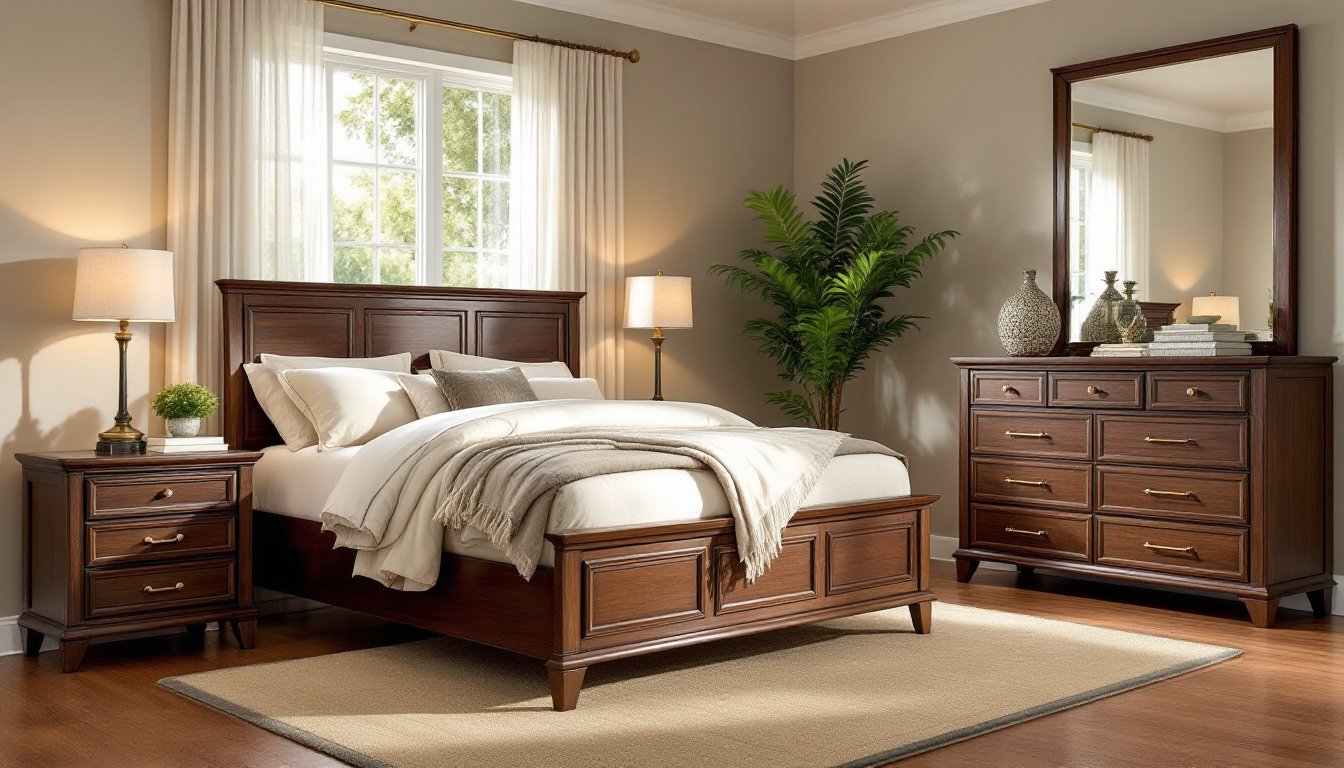
A complete king bedroom set typically includes a bed frame, two nightstands, and a dresser, though you’ll see variations depending on what the manufacturer bundles. The bed frame is the foundation: it holds a king mattress (76 inches wide, 80 inches long in standard dimensions) and must support the weight without sagging or squeaking. Look for frames with a center support beam and sturdy legs set near the corners, not too close to the edges.
Nightstands flank the bed and serve double duty: storage for lamps, books, and bedside items, plus they anchor the visual weight of the bed. A pair of nightstands should be roughly the same height as the top of your mattress, usually 24–28 inches, so reaching for your phone or water glass feels natural. Drawers or shelves matter here: open shelves feel airy but hide clutter less effectively than a drawer.
The dresser provides bulk storage and often anchors the foot or side of the room opposite the bed. A standard dresser for a king-size room is 48–60 inches wide: anything narrower might feel cramped. Look for full-extension drawers (they glide all the way out) over partial-extension: they’re easier to access and less likely to stick. A mirror is often included or sold separately, mount it securely if you attach it to a wall, especially in earthquake zones or homes with kids.
Popular Styles: Modern, Rustic, Contemporary, and Traditional
Style affects not just appearance but also how much space your set takes up and how easy it is to accessorize. Modern designs feature clean lines, minimal ornamentation, and often sleek legs that let light pass underneath, great for smaller rooms. Metal pulls and handles are common: finishes lean toward grays, blacks, and light woods.
Rustic sets embrace wood grain and heavier proportions. You’ll see reclaimed or hand-hewn details, carved elements, and warmer finishes like honey, cherry, or dark walnut. These sets command more visual presence, so your room needs space to breathe: they feel cramped in a small master bedroom. A good resource for browsing rustic and other bedroom styles is Homedit, which features detailed design ideas and room layouts.
Contemporary styles blur the line between modern and eclectic. They often mix materials, say, a wood frame with upholstered panels or metal accents, and aren’t afraid of color or texture. Contemporary pieces feel current without being trendy, and they pair well with layered bedding and mixed metals.
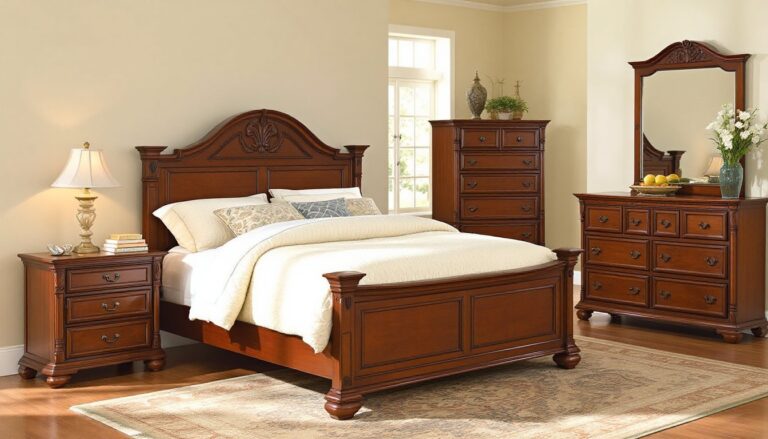
Traditional designs reference classic furniture forms: panel beds with decorative woodwork, turned legs, and symmetrical details. Wood tones are typically richer (mahogany, dark cherry), and hardware is often bronze or brass. These sets work beautifully in larger rooms and formal bedrooms but can feel stuffy in casual spaces.
Choosing a style isn’t about following trends: it’s about picking pieces that’ll feel right to live with. A homeowner who loves modern minimalism will be miserable surrounded by carved wood, and vice versa.
Choosing the Right Materials for Your Space
Wood Options, Metal Accents, and Upholstered Designs
Solid wood versus engineered wood is the first fork in the road. Solid hardwoods like oak, cherry, walnut, and hickory are durable, repairable, and get better-looking as they age. They’re also the priciest option, a solid wood king bedroom set easily runs $3,000–$8,000 or more. Engineered wood (veneered plywood or MDF with a wood veneer) costs less and works fine for dressers and nightstands, as long as the veneer is thick enough to sand and refinish once or twice. Avoid thin veneers glued to particle board: they chip and can’t be repaired.
For a mid-range budget, look for sets that mix solid wood frames and legs with engineered wood panels and drawers. This approach splits the cost difference without sacrificing structural integrity.
Metal accents like iron, brass, or brushed steel add character and durability. A wrought-iron headboard with wood components is stunning and functional: the metal won’t warp or crack. Hardware, pulls, handles, hinges, should be substantial, not flimsy. Cheap hardware sticks, breaks, and makes the whole piece feel cheap. Spend a few extra dollars on quality hinges and ball-bearing drawer slides.
Upholstered pieces bring texture and softness. An upholstered bed frame or headboard is gentler on walls if you frequently move the bed, and it’s easier to keep clean than carved wood. Quality upholstered pieces use hardwood frames underneath the fabric, not particle board. The fabric should be durable, a performance fabric rated for 100,000+ double-rubs (a test that simulates wear) will hold up better than regular cotton velvet, especially in high-traffic bedrooms or homes with kids and pets.
When picking materials, think about your climate and lifestyle. Solid wood can cup or expand in very humid climates: engineered wood is more stable. Pet owners benefit from tougher fabrics and finishes that hide scratches and are easy to clean. Light finishes show dust: dark finishes show water rings. Design Milk offers excellent guidance on material selection and contemporary design choices if you’re exploring options.
Finally, don’t overlook finishing quality. A good lacquer, stain, or paint job protects the wood and improves durability. Matte finishes hide dust better than gloss, but gloss wipes clean easier. A bedroom set with a thick, even finish will look new for years: one with thin or uneven finishing will start looking worn within months. If you’re shopping online, request close-up photos of the finish and hardware before committing. Better yet, visit a showroom so you can feel the wood grain, check drawer action, and see the finish in person. A set you love in photographs might feel wrong when you sit on the bed or open a drawer in your own bedroom.