Country patio furniture brings warmth, nostalgia, and lived-in comfort to any outdoor space. Whether you’re drawn to weathered wood, vintage accents, or farmhouse charm, country-style seating and tables transform a bare patio into an inviting retreat where family and friends naturally gather. Unlike trendy modern designs that fade quickly, country patio furniture holds its character through seasons and years. This guide walks you through defining your style, choosing durable materials, and creating a cohesive outdoor room that feels like home.
Table of Contents
ToggleKey Takeaways
- Country patio furniture prioritizes authenticity and durability over trendy designs, featuring solid wood, wrought iron, and finishes that develop character and patina over time.
- Choose weather-resistant materials like cedar or pressure-treated lumber paired with powder-coated metal to ensure your country patio investment withstands seasons of outdoor exposure.
- Create a cohesive outdoor space by selecting a primary wood tone, limiting your color palette to 2–3 accent hues, and layering pieces intentionally to achieve a collected-over-time appearance.
- Proper maintenance—including annual protective finishes, seasonal cleaning, and covered storage for cushions—allows country patio furniture to age gracefully while preserving its rustic charm.
- Incorporate vintage accents, farmhouse aesthetics, and regional materials to ground your country-style seating and tables in place, making your outdoor room feel like a natural extension of home.
What Defines Country Patio Furniture
Country patio furniture isn’t a single aesthetic, it’s a family of overlapping styles rooted in rural heritage, historical simplicity, and handcrafted appeal. Think of it as furniture that looks like it has a story: worn edges, honest joinery, unfinished finishes, and a deliberate rejection of polished perfection.
The core identity centers on authenticity. A country piece feels functional first, decorative second. Straight lines dominate over curves: heavy wood and wrought iron beat lightweight aluminum. Colors lean toward natural wood tones, weathered grays, whites, and earth-tone paints. Metal accents are typically black or rust-toned iron, not chrome or brushed nickel.
Country patio furniture also celebrates imperfection. Paint peeling slightly? That’s character. Visible wood grain and knots? That’s heritage. A wobbly joint from decades of use? That’s authenticity. This stands apart from modern minimalist patios, where every line is crisp and every finish is uniform.
Essential Styles and Design Elements
Rustic Wood and Metal Combinations
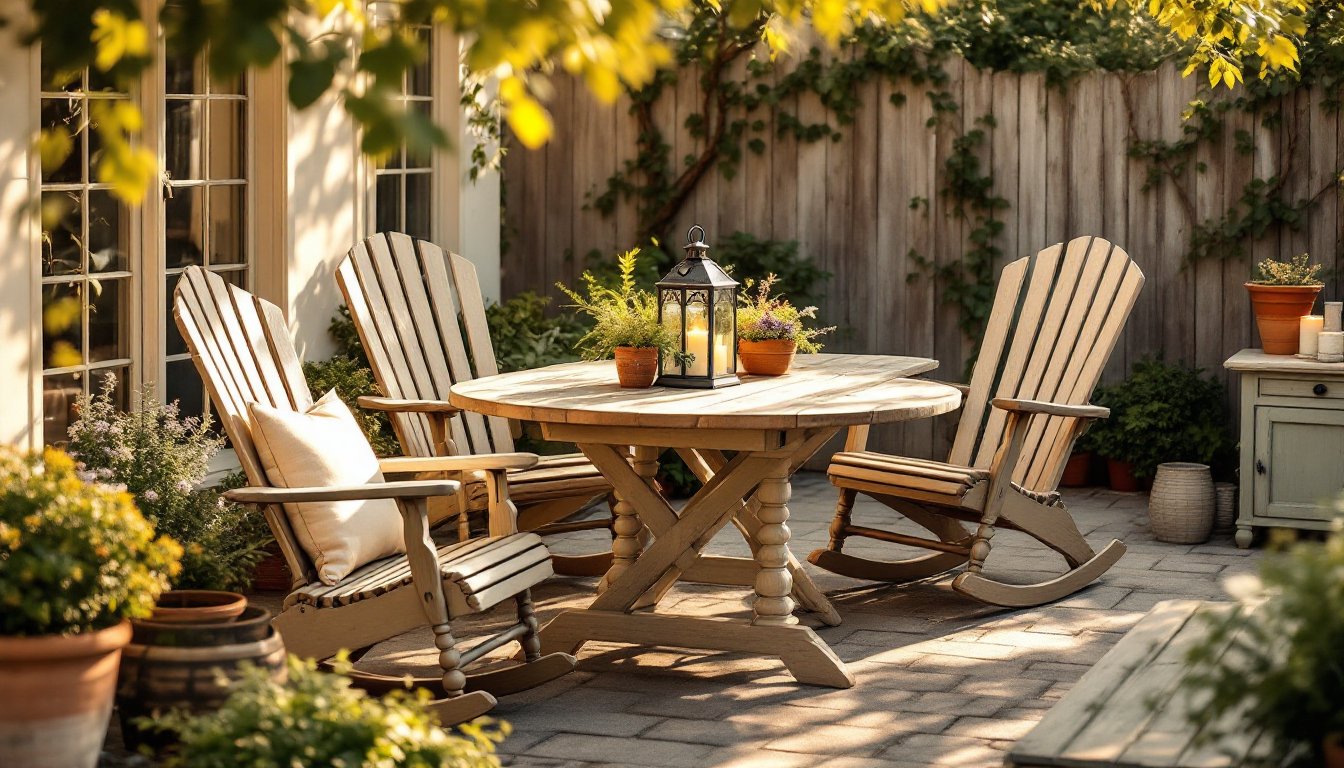
Rustic country furniture pairs solid wood with wrought iron or steel, typically in a dark finish. A classic Adirondack chair, made from pressure-treated or cedar wood with simple mortise-and-tenon joinery, epitomizes this approach. The wood is left relatively natural or painted a soft, muted color, while metal brackets, bolts, or frames add structure and visual weight.
Why this combo endures: wood alone can look flimsy in large outdoor pieces, while metal alone feels industrial. Together, they balance warmth and durability. Look for pieces where the iron has purposeful detail, scrollwork, riveted connections, or decorative legs, rather than generic bolts. When shopping, examine joints: are they mortised (wood inserted into wood), bolted, or welded? Mortised and bolted joints hold up better than simple screws over years of weather and use.
Farmhouse Aesthetics and Vintage Charm
Farmhouse country draws from 19th- and early-20th-century rural homes. Think painted wood tables with turned legs, benches with spindle backs, rockers, and settees. The furniture often wears a weathered paint finish, cream, soft sage, pale blue, or intentionally chippy white, that suggests age without being genuinely antique.
Vintage charm works with reclaimed pieces, reproduction farmhouse sets, and pieces that blend eras. A old cast-iron plant stand paired with a newer wooden bench feels collected over time rather than purchased as a matching set. The goal is that curated, “found-over-years” appearance. Demeurelapinede offers images of decks and patios that showcase how vintage and rustic elements combine for cohesive outdoor rooms. Color palettes typically include whites, creams, soft grays, and muted greens that won’t scream or demand constant attention.
Choosing the Right Materials for Durability
Outdoor furniture faces sun, rain, temperature swings, and sometimes neglect, so material choice makes or breaks a country patio investment.
Pressure-treated lumber (typically pine or spruce, rated for ground contact) resists rot and insect damage without staining or sealing initially, though a protective finish extends life. Cedar offers natural rot resistance and a beautiful grain: it’s lighter and more expensive. Teak is the gold standard, dense, naturally oily, and can weather gray for decades, but costs significantly more. For country style, cedar and pressure-treated pine are practical workhorse choices.
Wrought iron and steel require a rust-preventive finish. A powder-coated black or dark brown coat withstands weather far better than paint alone. When examining a piece, check welds for cracks and look for smooth, consistent coating. Rust spots mean the finish is compromised and water is penetrating.
Wicker, rattan, and woven materials add softness to country patios but need proper protection. Synthetic (resin) wicker performs better outdoors than natural cane: real wicker suits covered porches only. Cushions and pillows should use outdoor-grade fabrics rated for sun and water exposure, standard home décor fabrics mildew and fade fast.
Paint and stain finishes matter enormously. Outdoor-rated, UV-resistant paints and semi-transparent stains are non-negotiable. Two coats, proper surface prep (sanding and priming), and renewal every 2-3 years keep wooden pieces looking fresh. Designers at Country Living regularly showcase how proper finishing protects investment pieces while deepening their rustic character.
Design Tips for a Cohesive Country Outdoor Space
A country patio works best when it feels intentional, not cobbled together. Start by choosing a primary wood tone, say, warm honey cedar, and a color palette of 2–3 accent hues. Cream and dark green work beautifully: so do whites with rust-toned iron accents.
Layering is key to country charm. Don’t just plop a table and four chairs on bare pavers. Add a low wooden bench, a vintage side table, perhaps a rocker. Each piece should feel like it evolved into the space, not dropped in yesterday. Arrange seating to encourage conversation, angled rather than parallel, with a clear gathering point (a fire table, low table, or planter).
Scale matters. A delicate bistro chair looks lost on a large patio: a heavy farmhouse table dominates a small nook. Measure your space and sketch roughly where pieces sit before purchasing. Country doesn’t mean oversized: it means proportional to the space and human bodies.
Accessories finish the room. Outdoor throw pillows in linen or cotton canvas, a weathered lantern, potted plants in terracotta, and a rustic mirror lean into the farmhouse vibe. Cottage home furniture principles apply here: mixing wood tones and metal finishes is fine as long as the overall mood stays cohesive. Aim for “collected over time” rather than “coordinated from one catalog.”
Maintenance anchors longevity. Store cushions under cover during harsh weather: apply protective finish annually or as needed: scrub surfaces seasonally. Country furniture ages gracefully with care, developing deeper patina and character. Neglected pieces just look beaten down.
Designers at Sunset emphasize how regional materials, like reclaimed barn wood in the Midwest or weathered redwood in California, ground country patios in place, making them feel native to their landscape rather than transplanted.
Conclusion
Country patio furniture thrives on authenticity, durability, and honest materials. By prioritizing solid wood, quality metal work, and finishes built for outdoor weather, you create a retreat that looks better every year. Start with a cohesive color story, layer pieces intentionally, and don’t shy away from weathering and patina, they’re what make country furniture timeless. Your patio becomes not just a place to sit, but a destination where memories happen.