Leather living room furniture has endured as a design staple for good reason. It’s durable, it ages beautifully, and it works across nearly every aesthetic, from mid-century modern to industrial to traditional. But not all leather is created equal, and choosing the right piece without understanding the differences between grades, care requirements, and styling options can lead to buyer’s remorse. This guide walks you through everything you need to know to make informed decisions and keep your investment looking sharp for years to come.
Table of Contents
ToggleKey Takeaways
- Full-grain leather living room furniture is the most durable and valuable investment, developing a rich patina over time and lasting a decade longer than fabric alternatives.
- Leather furniture requires minimal maintenance—weekly dusting, immediate spill blotting, and conditioning every 6–12 months keeps your pieces looking sharp for decades.
- Full-grain and top-grain leather outperform bonded and faux alternatives in durability, though top-grain offers the best balance of affordability and longevity for most homeowners.
- Position leather furniture away from direct sunlight and maintain indoor humidity between 40–60% to prevent fading, drying, and adhesive breakdown.
- Layer leather living room furniture with textiles like throw pillows and blankets, plus complementary wood and metal pieces, to create visual warmth and prevent a cold or sterile appearance.
Why Leather Remains the Gold Standard for Living Room Furniture
Leather beats fabric in a few critical ways. First, durability: a quality leather sofa or chair can easily outlast a fabric counterpart by a decade or more. Spills are simpler to manage, a quick wipe prevents staining, whereas fabric absorbs liquids and holds odors. Second, leather develops a patina. Those scuffs and creases aren’t flaws: they’re character marks that tell the story of your home.
Third, leather works in nearly any room design. Whether you’re leaning into a minimalist aesthetic or crafting a living room minimalist interior design scheme, leather provides a neutral anchor that adapts to bold color schemes, neutral palettes, or eclectic mixes. It doesn’t trap pet hair or dust like microfiber does, and it doesn’t off-gas the way some synthetic materials do. Finally, leather is timeless. Trends come and go, but a well-maintained leather sectional or wingback never looks dated, only refined.
Types of Leather for Living Room Furniture
Understanding leather grades prevents you from overpaying for marketing hype or accidentally buying a product that won’t last.
Full-Grain vs. Top-Grain Leather
Full-grain leather is the real deal. It includes the entire hide, complete with its natural grain and imperfections. You’ll see markings, scars from the animal’s life, and variation in color and texture across the surface. That’s not a bug, it’s authenticity. Full-grain develops the richest patina and is the most durable option because the fibers remain intact. A full-grain leather sofa costs more upfront, but it resists damage better and can be refinished if needed.
Top-grain leather is a step down. The top surface is sanded and buffed to remove imperfections, then often coated with a protective finish (sometimes a polyurethane layer that mimics the texture of full-grain). It’s more consistent in appearance, slightly more stain-resistant due to the coating, but less breathable and less able to develop character over time. Top-grain is the sweet spot for many homeowners: more affordable than full-grain, more durable than bonded, and still genuinely leather.
Bonded and Faux Leather Alternatives
Bonded leather is a blend of real leather scraps and polyurethane. Manufacturers grind leftover leather, mix it with adhesive, and bind it to a fabric backing. It looks like leather, feels vaguely like leather, and costs significantly less. But here’s the catch: the polyurethane binder breaks down over time. After five to ten years, bonded leather peels, flakes, and cracks. If budget is tight, bonded works for a guest room piece you won’t use daily, but it’s not an investment.
Faux leather (synthetic or vegan leather) is polyurethane or PVC on a fabric backing. It mimics leather’s appearance and doesn’t require the same maintenance as genuine leather. Modern faux leather is convincing, breathes better than older versions, and appeals to those avoiding animal products. The tradeoff: it won’t develop patina, doesn’t age as gracefully, and can feel plasticky to the touch. Think of it as a practical alternative, not a pretender to genuine leather’s throne. When shopping, brands like Home Meridian Furniture and BR Home Furniture offer both genuine leather and quality faux options.
Essential Care and Maintenance Tips
Proper care extends your leather furniture’s life by years. Here’s what actually matters:
Start with the basics. Dust with a soft, dry cloth weekly to prevent grime buildup. Vacuum crevices and seams monthly using an upholstery attachment, leather itself doesn’t trap dust, but dust can hide in stitching and folds.
Address spills immediately. Blot (don’t rub) with a clean, damp cloth. For fresh spills, water is often enough. For oils, grease, or wine, use a leather cleaner specifically formulated for your leather type. Most manufacturers provide care guidelines: follow them. Using the wrong cleaner can strip finishes or stain.
Condition regularly. Full-grain and top-grain leather benefit from conditioning every 6 to 12 months, depending on humidity and use. A leather conditioner restores oils that naturally evaporate, keeping the hide supple and less prone to cracking. Bonded and faux leather rarely need conditioning and can actually be damaged by it, check your product’s specs first.
Avoid direct sunlight. Position seating away from south-facing windows. UV rays fade leather and cause it to dry out and crack. If repositioning isn’t possible, use light-filtering curtains or UV-blocking film on windows.
Control humidity. Extremely dry air (below 30% relative humidity) dries out leather: overly humid air (above 70%) promotes mildew and adhesive breakdown. Most homes hover in the comfortable 40–60% range during normal conditions.
Protect high-traffic areas. Use throw blankets or leather protectant sprays on sections that see heavy use. A quality protectant adds a breathable barrier against stains and scratches.
Styling Your Leather Furniture for Maximum Impact
Leather furniture anchors a room. Its richness and texture create a foundation that other pieces build upon.
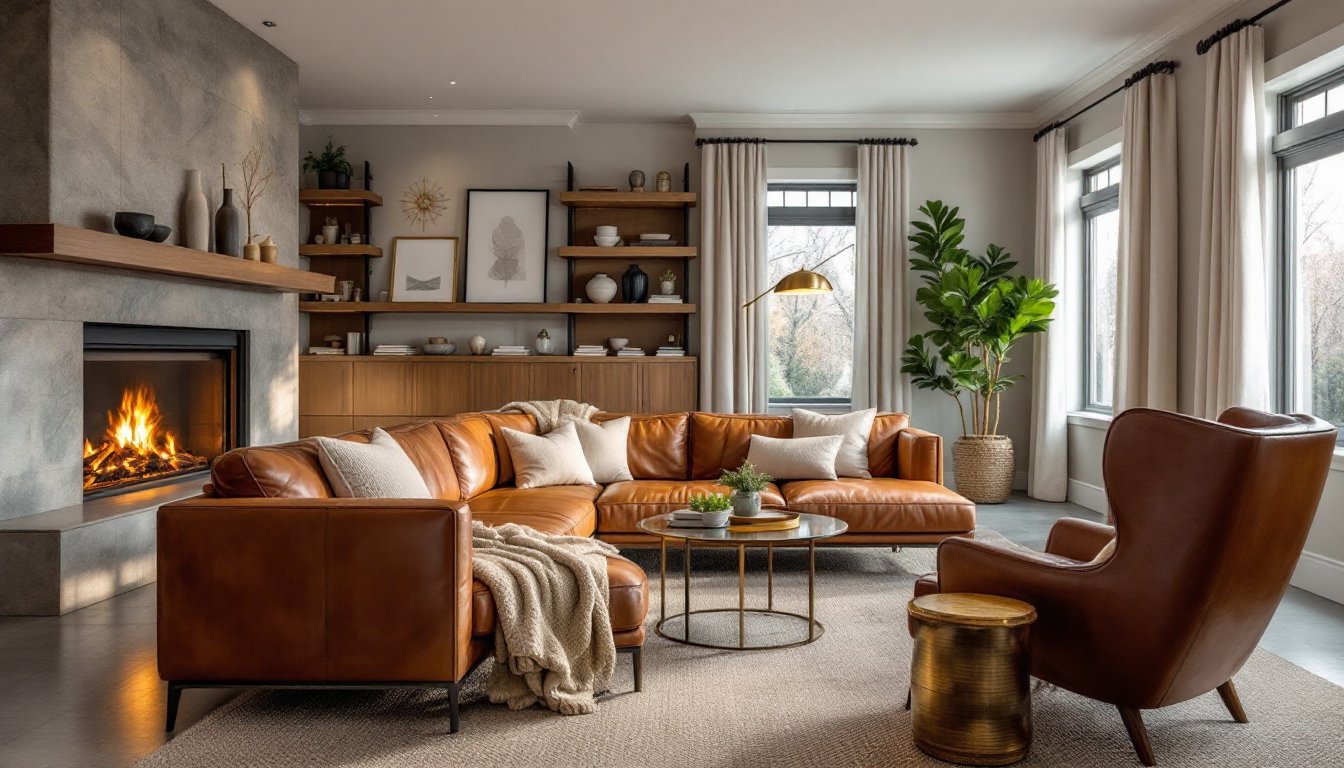
Layer with textiles. Leather alone can feel cold in a space. Add throw pillows in linen, wool, or cotton, natural fibers complement leather without competing. Drape a chunky knit or faux fur throw across the back or arm. These textiles warm up the visual landscape and invite people to sink in.
Balance color and finish. Cognac, tan, and chocolate brown leather work in nearly every palette. If you’re working with darker leather, pair it with lighter walls and bright accents to prevent the room from feeling cave-like. Lighter creams and grays demand complementary neutrals or bold accent colors to avoid a bland, corporate feel. Resources like Homedit and Elle Decor showcase how designers balance leather with complementary tones and textures.
Consider scale and placement. A leather sofa or sectional is often the largest piece in the room. Position it as your focal point, typically opposite a TV, fireplace, or window with a view. Pair it with a coffee table that doesn’t overwhelm (wood, metal, or glass all work). Add a leather accent chair or ottoman for texture repetition, or mix in a upholstered seat in a coordinating fabric.
Add supporting furniture carefully. If your living room features genuine leather furniture, as recommended when exploring home furniture Baton Rouge or specialty showrooms, integrate wood, metal, or stone in side tables, shelving, and lighting. These materials contrast with leather’s smooth surface and add visual interest. A wood-frame console table, a metal and glass side table, and a sculptural lamp create balance.
Layer your lighting. Leather reflects light subtly: it doesn’t glow the way fabric does. Use a mix of ambient, task, and accent lighting. A pendant or chandelier overhead, a floor lamp beside a reading chair, and maybe picture lights above artwork ensure the leather reads properly and doesn’t disappear into shadow.
Conclusion
Investing in leather living room furniture isn’t just about owning something expensive, it’s about choosing pieces that will serve your home for decades, gain character with age, and work across evolving design preferences. Whether you opt for full-grain’s uncompromising authenticity, top-grain’s practical balance, or faux leather’s cruelty-free appeal, the key is matching the leather type to your lifestyle, maintaining it properly, and styling it with intention. Your living room will thank you for the thoughtfulness.