White living room furniture isn’t just a design choice, it’s a practical investment in a space that feels open, calm, and adaptable. Whether you’re starting from scratch or refreshing an existing room, white pieces serve as a neutral canvas that works with virtually any accent color, texture, or style you layer on top. From creamy off-whites to crisp bright whites, the range of options has expanded significantly, giving DIY decorators and homeowners real flexibility in both aesthetic and function. This guide walks you through selecting the right white furniture pieces, maintaining them long-term, and creating visual interest without cluttering your space.
Table of Contents
ToggleKey Takeaways
- White living room furniture creates an illusion of space and brightness while serving as a versatile, neutral canvas that works with any design style for years to come.
- Choose sofas and sectionals in cream or ivory tones with performance fabrics, and prioritize quality and proper measurements over trendy features—a good sofa lasts 7–10 years with proper care.
- Layer texture through natural materials like wood, linen, jute, and plants to add visual interest and warmth to white furniture without relying on bold accent colors.
- Maintain white furniture by vacuuming weekly, blotting spills immediately, and using fabric-appropriate cleaners; white painted pieces require touch-up paint and regular dusting to prevent visible wear.
- Build a budget-friendly white living room by investing in one quality sofa, then sourcing secondary pieces from budget retailers, thrift stores, or DIY projects with paint and reupholstery.
- Strategic lighting with warm-toned bulbs (2700K), layered through overhead fixtures and table lamps, transforms white furniture from feeling cold to inviting and adaptable to your mood and time of day.
Benefits of White Living Room Furniture
White furniture brightens a room and creates an illusion of more space, a fact that holds true whether your living room gets natural light or relies on lamps and fixtures. The psychological effect is real: lighter palettes feel less confining, which is why renters and homeowners in smaller homes often gravitate toward white sofas and cabinets.
Beyond the visual payoff, white living room furniture is remarkably versatile. A white sectional works in farmhouse, minimalist, transitional, and even modern eclectic schemes. You’re not locked into one design direction the way you might be with a charcoal gray or navy sofa. This flexibility makes white pieces a smart long-term purchase: they won’t feel dated in three years when your taste shifts.
White also reflects light, which can reduce eye strain in rooms with limited natural windows. From a practical standpoint, this means less reliance on overhead lighting during the day, potentially lowering energy costs. Also, white furniture pairs beautifully with natural textures, wood coffee tables, jute rugs, linen drapes, creating warmth and dimension that prevents the room from feeling cold or sterile.
Key Furniture Pieces for a White Living Room
When planning a white living room, start with the anchor pieces: a sofa or sectional, a coffee table, and storage solutions. These three categories drive the overall feel and functionality of the space.
Sofas and Sectionals
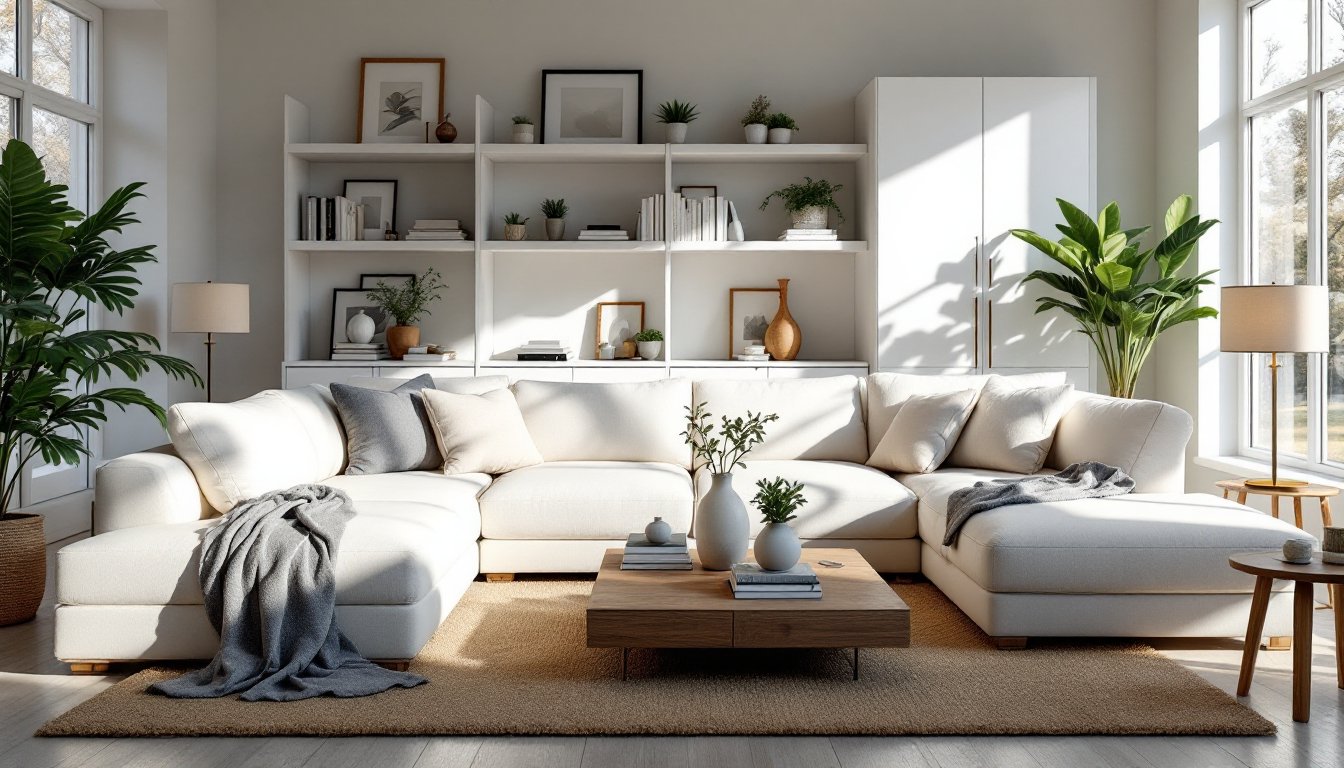
A white sofa is the easiest way to establish your design direction. Cream or ivory tones feel warmer and more forgiving than bright white, which can read as clinical in certain lighting. Look for performance fabrics, microfiber, solution-dyed polyester, or blends with stain resistance built in, if you have kids, pets, or simply want easier maintenance.
Dimensions matter. Measure your room’s doorways and hallways before ordering: a sectional is worthless if it can’t make it through the entrance. Standard sofa depths range from 30 to 36 inches: shallower options (around 30 inches) work in tight spaces but may feel cramped for lounging. Compare arm heights too. Lower arms (8–10 inches) feel more open and contemporary: higher arms (12+ inches) provide better back support and read as more traditional.
When shopping, test upholstery durability. Rub a swatch with a damp cloth or press your thumbnail gently into the fabric: poor-quality textiles will show wear, pilling, or discoloration within months. Mid-range furniture brands like Home Meridian Furniture offer solid durability without luxury pricing.
Coffee Tables and Storage
White coffee tables anchor your seating arrangement and set the style tone. Wood tables (painted or naturally whitewashed) add warmth: lacquered or high-gloss finishes feel more modern: concrete or marble tops feel contemporary and are easier to clean. Pair your table style with your sofa: a chunky wooden table complements a deep, cushioned sectional, while a sleek glass-and-metal table suits a minimalist or cottage home furniture aesthetic.
Storage is where white furniture earns its keep. White shelving, bookcases, and cabinets organize books, plants, and decor without visual heaviness. Floating shelves or open designs feel lighter than solid cabinets: closed storage hides clutter but can feel bulky if poorly proportioned. For a living room, aim for a 60/40 split: 60% open display (books, plants, curated objects) and 40% closed storage (baskets, drawers for remotes and blankets).
Creating Contrast and Visual Interest
An all-white room risks feeling flat if you don’t layer in contrast and texture. The key is depth, not clashing colors, but subtle variation.
Start with textiles. Off-white or cream furniture paired with soft gray or warm taupe accents (throw pillows, blankets, rugs) creates a cohesive, restful palette. Add one accent color, navy, sage green, or warm terracotta, through art, smaller pieces, or accessories. This isn’t about wild maximalism: it’s about strategic pops that prevent monotony.
Texture does the heavy lifting when color variation is minimal. A linen sofa, a sisal rug, a woven storage basket, and a knit throw create visual interest through surface variation alone. Wood tones, whether your coffee table, side tables, or picture frames, warm up white furniture and break up the monotony. Don’t skip natural elements like plants, which add life and color without requiring repainting or new furniture.
Lighting matters too. Warm-toned bulbs (2700K color temperature) make white furniture feel inviting: cool-toned bulbs (5000K+) can make it feel cold. Layer your lighting: overhead fixtures, table lamps with linen shades, and perhaps a floor lamp near reading seating. This approach lets you adjust the room’s feel depending on the time of day or your mood. Design-focused platforms like MyDomaine offer room tours showing how strategic lighting transforms white spaces.
Maintenance and Care for White Furniture
White shows everything: dust, spills, pet hair, fingerprints. Accepting this upfront helps you choose fabrics and finishes that work with your lifestyle, not against it.
For white upholstered furniture, vacuum weekly with an upholstery attachment to prevent dust settling into fibers. Blot spills immediately with a clean white cloth (colored cloths can transfer dye). For deeper cleaning, check your furniture’s care tag first. Most white upholstery can handle a mixture of mild dish soap, white vinegar, and water. Test on a hidden seam before treating the whole piece. Avoid bleach or oxygen-based cleaners on delicate fabrics: they can yellow white textiles over time.
White painted or lacquered furniture (tables, cabinets, shelves) needs different care. Dust regularly with a soft microfiber cloth. For spots or scratches, keep touch-up paint or a repair pen on hand, they’re inexpensive and prevent visible damage from worsening. If your white furniture has a glossy finish, use a glass or furniture polish every few months to maintain shine and protect against moisture rings from glasses or vases.
For white leather or faux leather pieces, condition every 6–12 months to prevent drying and cracking. Leather-specific cleaners are worth the small investment: they lift dirt without stripping natural oils. In high-humidity climates, ensure good air circulation around white furniture to prevent mildew or mold growth in crevices and under cushions.
Budget-Friendly Tips for White Living Room Decor
A white living room doesn’t require a luxury budget. Smart shopping and strategic spending stretch dollars further.
Start with one good investment piece, your sofa. This is where you shouldn’t compromise: a quality white sofa lasts 7–10 years with proper care. Secondary pieces (side tables, shelves, accent chairs) can come from budget retailers or even thrift stores. A whitewashed or painted vintage side table costs a fraction of new and adds character. Thrift and upcycle where possible: a dated wood dresser becomes stylish white bedroom storage with a coat of paint and new hardware.
DIY finishing touches keep costs down. Paint old shelves white, frame affordable art prints from online retailers, or create a gallery wall using matted and framed family photos. A fresh white paint job on walls amplifies the brightness of furniture without spending on new pieces. Building textural interest through budget-friendly elements, design resources like Domino often feature affordable styling hacks, means you don’t need expensive art or accessories to make the room feel curated.
Consider a modular or sectional sofa from affordable brands: they offer flexibility and cost less per seating inch than individual matching pieces. Invest in one or two quality throw pillows and blankets, then rotate seasonal or thrifted versions around them. This approach lets you refresh the look monthly without replacing core furniture. For a white living room, neutral accent colors (grays, taupes, soft blues) from budget retailers pair seamlessly and hide in your design for years without feeling dated.
<h2 id="” data-id=””>Bringing It Together: White Living Room Furniture as a Foundation
White living room furniture works best when you treat it as a foundation, not a limitation. The most successful white rooms balance the neutrality with personality, whether that’s through living room minimalist interior design principles, layered textures, or bold accents in your choice decor. Start with one or two quality white pieces, layer in texture through textiles and natural materials, and refresh smaller elements seasonally or as your taste evolves. Your white furniture will adapt, support your style, and keep your living room feeling open and intentional for years to come.