Picking out a dining room furniture set shouldn’t feel overwhelming. Whether you’re furnishing a new home, updating an aging setup, or giving your dining space a complete refresh, the right pieces can transform how your family gathers and entertains. The key is balancing aesthetics with practicality, you need furniture that looks good, fits your space, and actually works for how you live. This guide walks you through the essentials: understanding your layout, knowing which pieces matter most, spotting quality at any budget, and finding a style that feels like home.
Table of Contents
ToggleKey Takeaways
- A quality dining room furniture set should balance aesthetics with practicality, requiring proper measurements and at least 36 inches of clearance around the table for comfortable movement and traffic flow.
- Invest most in the dining table as the focal point—solid construction and good finishes ensure durability of 20+ years—while mixing and matching chairs from different sources can save money without sacrificing style.
- Table height should be 30 inches with 12 inches of legroom below, and chair seat height should sit 10 to 12 inches below the tabletop to ensure comfort during meals.
- Choose materials wisely: solid wood requires more maintenance but ages beautifully, while veneer and finishes offer budget-friendly durability for everyday use and resist water rings and heat marks.
- Natural and artificial lighting placement directly impacts how your dining furniture looks and feels, so position your set to take advantage of windows and plan overhead fixtures for evening ambiance.
- Style choices—modern, traditional, or transitional—set the emotional tone; neutral tones offer timeless appeal and flexibility, while jewel-tone upholstery and storage solutions like sideboards or credenzas maximize both functionality and visual impact.
Understanding Your Space and Layout Needs
Before you shop, measure your room and be honest about what you’re working with. Dining rooms come in all shapes and sizes, and cramming an oversized table into a small space kills the whole vibe, and makes traffic flow impossible.
Start by measuring the length and width of your room, then determine how much space you can dedicate to the dining area. A good rule of thumb is to leave at least 36 inches of clearance between the table edge and the wall or other furniture. This gives people enough room to pull out chairs and walk around comfortably. If you’ve got a galley-style layout or an open-concept dining area, you might need to be more creative.
Consider the room’s natural pathways. Where do people walk from the kitchen? Where does conversation naturally happen? If your dining table blocks the main walkway, guests will feel cramped and awkward. Think about whether you need a large table for entertaining or something more intimate for everyday meals.
Light also matters. A dining room with plenty of natural light feels airier and more inviting. Check where windows are located, because you’ll want to position your furniture to take advantage of that light rather than cast shadows across the table. Artificial lighting, overhead fixtures, pendants, or a chandelier, is equally important for evening meals and ambiance.
Key Furniture Pieces Every Dining Room Set Should Include
Tables, Chairs, and Storage Solutions
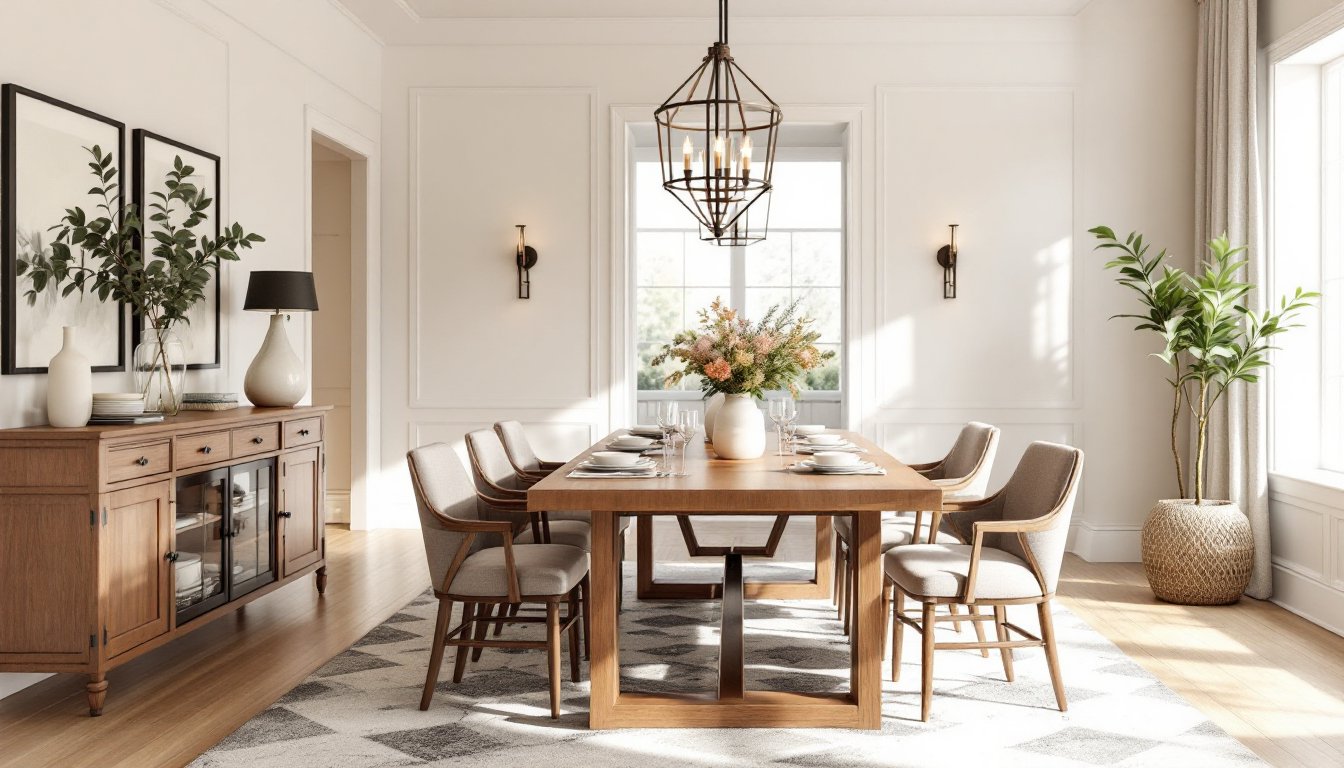
Your dining room set’s backbone is the table. The standard height is 30 inches from floor to tabletop. When you sit down, there should be roughly 12 inches between your lap and the table underside, if it’s tighter, your legs will feel cramped. Common table shapes include rectangular (great for families, works in narrow rooms), round (invites conversation, takes up less visual space), and oval (middle ground). Round and oval tables seat fewer people but feel more intimate: rectangular tables maximize capacity and fit longer rooms.
Table width usually ranges from 36 to 42 inches. Narrower tables (36 inches) are fine for two-person place settings on each side but feel tight with serving dishes. A 42-inch width gives you breathing room for bread baskets, wine glasses, and the salt shaker without people reaching across the table.
Now for chairs, and this is where people often mess up. Don’t assume a dining set’s matching chairs are the most comfortable option. Many matching sets prioritize looks over ergonomics. Sit in every chair before buying. Your lower back should have support: you shouldn’t feel like you’re perched on a stool. Seat height should sit about 10 to 12 inches below the tabletop. Armchairs at the head and foot work beautifully for formal settings, but they take up legroom, so account for that in your measurements.
Storage deserves real thought. A sideboard, china cabinet, or hutch gives you a place for serving pieces, linens, and everyday dinnerware. If your dining room doubles as a multipurpose space (home office, kids’ assignments area), a credenza with closed storage hides clutter while keeping your essentials organized. When evaluating dining room furniture set options, storage solutions can define the entire look and function of your space.
Selecting the Right Style and Materials
Modern, Traditional, and Transitional Options
Your style choice sets the emotional tone. Modern dining sets emphasize clean lines, minimal ornamentation, and neutral palettes, think sleek wood tables with tapered legs, glass tops, or metal bases paired with upholstered chairs. Modern design prioritizes function and negative space. Traditional sets lean into craftsmanship: rich woods like cherry or mahogany, detailed molding, ornate legs, and upholstered seating with rolled arms. Transitional splits the difference, it borrows modern simplicity but adds warmth and classic elements like turned legs or soft curves.
Material choice affects durability, maintenance, and cost. Solid wood, oak, maple, walnut, or cherry, ages beautifully but costs more upfront and requires occasional refinishing. Veneer on plywood is lighter on the wallet and holds up fine for everyday use, though deep scratches are harder to repair. Wood dining tables can withstand daily living when properly sealed and maintained.
Glass tabletops look contemporary and make smaller rooms feel larger, but they show fingerprints and require frequent cleaning. They’re also less forgiving if you have young children or pets. Marble or stone tops photograph beautifully but stain easily and are pricey. Upholstered chairs in fabric need occasional vacuuming and spot-cleaning: leather is easier to wipe clean but can crack in dry climates and shows wear differently.
Color and pattern set the mood. Neutral tones (gray, beige, tan, white) feel timeless and let you change decor without replacing furniture. Jewel tones (emerald, navy, burgundy) add personality and richness. Patterned upholstery can feel dated quickly unless you love the pattern enough to live with it for years. Industry trends highlighted on Homedit and MyDomaine often lean toward understated elegance rather than bold statement pieces, which actually holds resale value better.
Consider BR Home Furniture: Transform Your Space with Style and Comfort Today – Demeurelapinede when shopping for options that blend materials smartly, mixing wood with upholstery, for example.
Budget-Friendly Tips for Quality Furniture Investment
You don’t need to spend $5,000 to get a solid dining set. Smart shopping means knowing where to splurge and where to save.
Prioritize the table. It’s the focal point and gets used daily. Spend more here for solid construction, good finish, and wood quality. A well-made table lasts 20+ years: a cheap one might wobble in five.
Mix and match chairs. Matching dining chairs look coordinated, but buying individual accent chairs from different places often costs less and looks intentional. Pair four inexpensive chairs with two statement armchairs, or use wooden chairs with one upholstered bench. This approach also lets you replace a single worn chair without buying a whole new set.
Timing matters. End-of-season sales (late winter for spring collections, August-September for fall) often bring 20-40% discounts. Black Friday and Boxing Day sales are real opportunities if you’re not picky about color or finish.
New versus used. Estate sales and consignment shops offer solid wood pieces from decades past, often cheaper than mass-produced new furniture. Check joints, wood condition, and that all parts are present before committing. Vintage pieces often surprise you with their quality compared to modern budget options.
Finish matters more than wood species. A well-finished plywood table with a protective topcoat outlasts a bare solid wood table. UV-resistant finishes and polyurethane coatings protect against water rings, heat marks, and daily wear. Ask about finishing when buying, it’s often worth upgrading.
Resources like House Beautiful showcase dining setups at various price points, proving that style isn’t exclusive to luxury spending.
Conclusion
Choosing a dining room furniture set comes down to three questions: Does it fit your space? Is it comfortable and well-made? Does it reflect how you actually live and entertain? When you nail those three things, you’ve got a set that’ll work for years. Measure twice, sit in chairs before buying, and don’t skip quality finishes just to save $200. Your dining room deserves furniture that’s as practical as it is beautiful.