Picking out upholstered living room furniture is one of those decisions that affects your home every single day, and for years to come. Whether you’re furnishing a space from scratch or replacing a worn sofa, the choices matter. Fabric type, construction quality, size, and style all play a role in whether your furniture will last a decade or fall apart in three years. This guide walks you through the practical decisions that separate good investments from costly mistakes, so you can confidently choose pieces that fit your life, your space, and your budget.
Table of Contents
ToggleKey Takeaways
- Choosing the right upholstered living room furniture requires evaluating fabric durability, frame construction, sizing, and maintenance needs to ensure your investment lasts a decade or longer.
- Microfiber suits active households with pets and kids, while wool and leather offer premium durability—select based on your household’s actual lifestyle rather than showroom appeal.
- A neutral foundation sofa (gray, tan, cream, or navy) paired with accent pieces prevents trend fatigue and works with evolving décor changes.
- Hardwood frames with eight-way hand-tied or sinuous springs, high-density foam, and mortise-and-tenon joinery distinguish quality furniture from budget pieces that sag within years.
- Regular vacuuming, immediate spill blotting, monthly cushion rotation, and professional cleaning every 18–24 months dramatically extend your furniture’s lifespan and appearance.
- Measure doorways, hallways, and room layout carefully before purchasing—seat depth, sectional placement, and traffic flow affect both functionality and comfort for years to come.
Understanding Upholstery Materials and Durability
The fabric you choose is the backbone of how long your furniture will hold up. It’s not just about looks, durability, stain resistance, and maintenance demands differ wildly across material types. Understanding the trade-offs helps you pick something that matches your household’s reality, not just the showroom photo.
Common Fabric Types and Their Strengths
Microfiber is tough and pet-friendly. It resists stains better than natural fabrics and feels soft, making it a solid choice for families with kids or animals. But, microfiber can show dust easily and may pill over time, especially in high-traffic areas. Expect to pay $8–15 per yard.
Linen and linen blends breathe well and look sophisticated, but they stain easily and wrinkle naturally. Pure linen requires more maintenance: blends (linen mixed with polyester) offer a middle ground. Plan on $12–20 per yard and factor in more frequent professional cleaning.
Wool is durable and naturally stain-resistant, though expensive. It’s ideal if budget isn’t a constraint and you want something lasting 15+ years. Wool costs $15–25+ per yard.
Leather and faux leather are easy to wipe clean and very durable. Real leather develops a patina over time, which some love: faux leather (polyurethane) mimics the look but won’t breathe like real hide and can feel plasticky. Leather runs $20–40+ per yard: faux leather is cheaper but less durable.
Performance fabrics (synthetics engineered for stain and spill resistance) are increasingly popular in living rooms. Brands like Sunbrella make fabrics designed to handle wear, moisture, and UV exposure. They’re not cheap ($12–18 per yard), but they reduce maintenance stress significantly.
When evaluating durability, look at the rub test rating (measured in Martindale cycles). Anything above 15,000 cycles suits active households: under 10,000 is fine for formal, adult-only spaces. Check the label or ask the retailer, it’s a concrete measure, not marketing speak.
Selecting the Right Style and Color for Your Space
Style and color do more than make your living room Instagram-worthy, they set the mood and affect how the space functions. The best piece is one you’ll actually want to sit on in five years, not one that felt trendy in 2026.
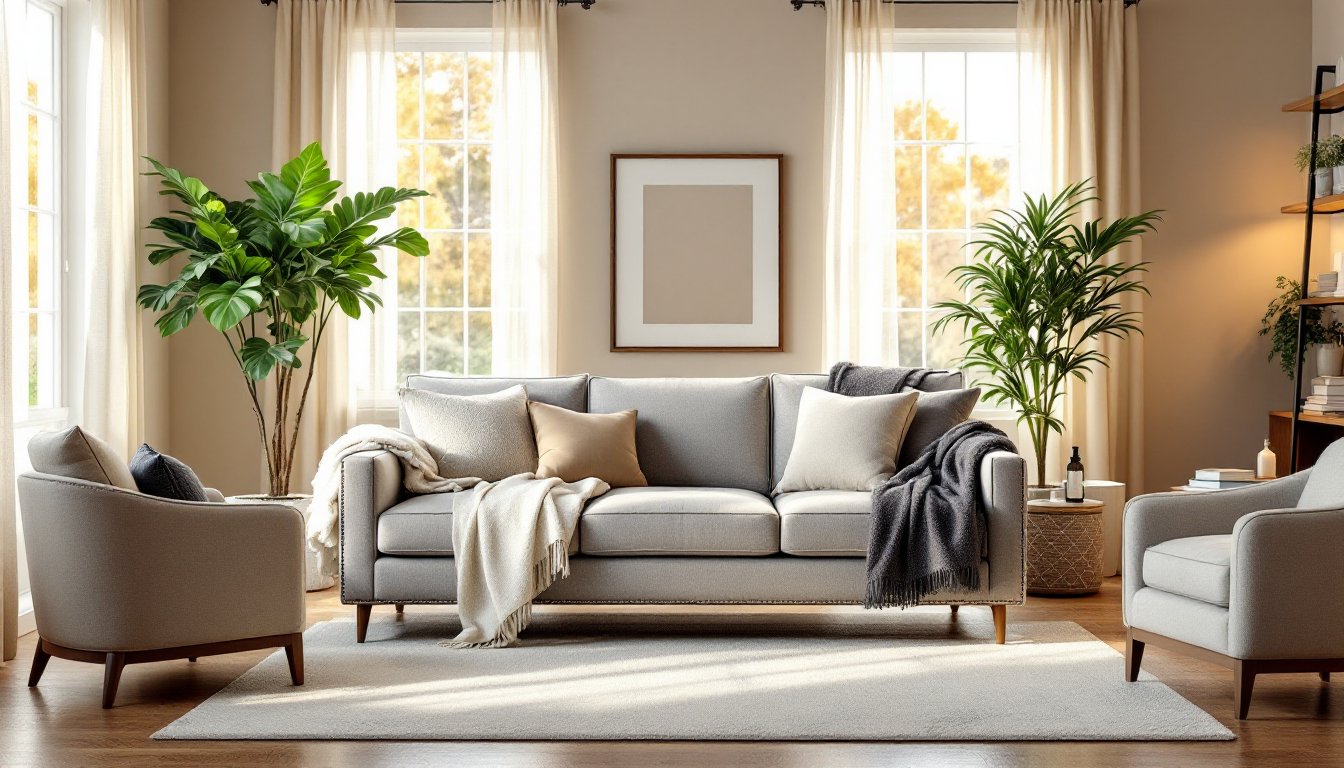
Start by considering the fixed elements in your room: wall color, flooring, natural light, and other furniture. A neutral sofa (gray, tan, cream, navy) works as a foundation and pairs with almost any accent color or rug. If you love pattern, reserve it for smaller pieces like chairs or ottomans: upholstering an entire sectional in bold florals or geometric prints can feel dated quickly. A living room minimalist interior design approach works well if you prefer simplicity and longevity over trend-chasing.
Color psychology matters too. Warm neutrals (taupe, warm gray, caramel) feel inviting: cool neutrals (charcoal, cool gray, greige) feel contemporary. Jewel tones (emerald, sapphire, deep rust) add richness but demand confidence in your space. If you’re uncertain, test your color choice by ordering samples or borrowing a similar fabric from a furniture store to live with for a few days.
Style falls into broad categories: modern (clean lines, minimal ornamentation), transitional (modern bones with traditional warmth), traditional (rolled arms, nailhead trim, classic silhouettes), and casual (comfortable, less formal). Matching your furniture style to your home’s overall aesthetic prevents that “this doesn’t belong here” feeling. Resources like Homedit’s interior design ideas showcase how different styles work in real homes, helping you narrow choices before shopping.
Sizing and Layout Considerations
Size mistakes are costly and frustrating. A sofa that doesn’t fit through your front door, or a sectional too large for the room, turns a purchase into a problem.
Measure your space first. Note the width of doorways and hallways (actual openings, not the frame width), many sofas are wider than 38–40 inches. Measure the sofa depth you’re considering and ensure it leaves at least 18 inches of walkway space behind it. Check ceiling height: low ceilings can make large, tall-backed sectionals feel oppressive.
Think about traffic flow. In a living room, you want a clear path from the entrance to the primary seating area and to other exits. Sectionals are great for large spaces but can monopolize a room if poorly placed. An L-shaped cottage home furniture style sectional works well in corner arrangements, while a straight sofa with chairs offers more flexibility.
Seat depth matters more than you’d think. Standard is 30–36 inches: deeper (38–42 inches) is luxurious but eats floor space and can be harder to get out of for elderly users. Test-sit pieces in the showroom, your comfort beats looks every time.
If you’re shopping for a Home Meridian Furniture piece or similar branded sofa, confirm delivery lead times and assembly requirements. Some retailers charge $200–500 to deliver and assemble: factor that into your budget.
Quality and Construction Features to Evaluate
Construction quality separates furniture that lasts a decade from pieces that sag and squeak in three years. You won’t see the frame or springs, but they’re where durability lives.
Hardwood frames (oak, maple, beech) are superior to softwood or particle board. Softwood splinters, warps, and fails under weight. Hardwood frames should be kiln-dried to prevent cracking. Ask the salesperson, if they don’t know, that’s a red flag.
Eight-way hand-tied springs are the gold standard for comfort and longevity, but they’re expensive. Most mid-range sofas use sinuous springs (the modern, cheaper option that still works well) or foam core (lightweight, budget-friendly but less durable long-term). Spring systems with corner blocks glued and screwed (not just stapled) hold together longer.
Check padding quality. High-density polyurethane foam (2.5 lbs/cubic foot or higher) resists compressing flat: cheap foam feels comfortable initially but sags within months. Cushion covers should be removable and machine-washable if possible, stains happen.
Joinery, how the frame is connected, matters. Mortise-and-tenon joints are stronger than staples alone. Look for dowels or corner blocks wherever arms meet the frame. Gabby Home Furniture and other mid-to-premium brands emphasize these construction details in their specs, so review published materials.
Finally, check the warranty. Reputable makers offer 5–10-year coverage on frame and spring defects: avoid anything under 3 years. Read the fine print, some warranties exclude normal wear or frame splits from wood movement, which is dishonest marketing.
Maintenance and Care Tips for Long-Lasting Furniture
Proper care extends the life of your furniture significantly. Different fabrics demand different approaches, so learn your fabric’s needs before bringing the sofa home.
Vacuuming regularly (weekly for high-traffic homes) prevents dust and debris from settling into fibers and breaking them down. Use an upholstery attachment and low suction to avoid damaging delicate fabrics.
Rotate and flip cushions monthly to distribute wear evenly. This single habit prevents one side from looking flattened while the other stays plump. If your sectional has cushions you can remove, rotate those too.
Blot spills immediately, don’t rub, which pushes liquid deeper into fibers. Use a white cloth (colored cloth can bleed onto fabric) and work from the outside edge inward to prevent spreading. Warm water works for most spills: keep a spray bottle of upholstery cleaner handy for tougher messes.
Professional cleaning every 18–24 months keeps deep grime out and extends life. Expect to pay $200–500 for a standard sofa, more for sectionals. Dry cleaning or steam cleaning both work: check your fabric’s care tag or ask the furniture maker which method they recommend.
Protect from sunlight. UV fades fabric and weakens fibers over time. Use curtains or sheers during peak sun hours, or position your sofa away from direct windows if possible. This is especially important for darker fabrics, which fade more noticeably.
Avoid eating on furniture. Crumbs and spills accumulate, and grease stains are harder to remove the longer they sit. Enforce a “drinks in a coaster” rule and discourage snacking on the sectional. BR Home Furniture and other retailers offer fabric protection treatments during purchase, they’re often worth the cost for families with kids. These treatments don’t prevent stains, but they buy you time to blot and clean before permanent damage occurs. Elle Decor’s luxury furniture guides cover care for high-end upholstery if you’re investing in premium pieces. MyDomaine also publishes seasonal furniture care tips that keep pieces fresh year-round.
Conclusion
Choosing upholstered living room furniture boils down to honest decisions about materials, construction, size, and maintenance. Know your household’s reality, kids, pets, heavy use, and choose accordingly rather than a piece you’ll resent. Take time to measure, test-sit, and understand what you’re buying. Quality construction and the right fabric matter far more than the trendiest style. When you get it right, your living room becomes the comfortable heart of your home for years to come.