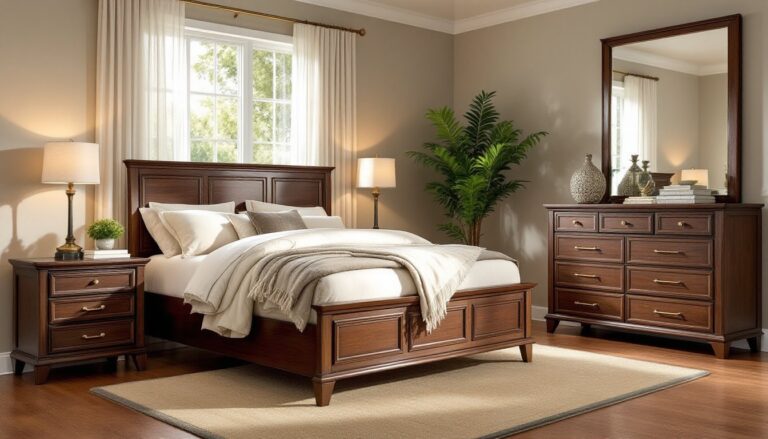
A king-size bedroom furniture set isn’t just about filling a room, it’s about creating a functional, comfortable sanctuary where you’ll spend about a third of your life. Whether you’re furnishing a primary bedroom, guest room, or master suite, a complete king bedroom furniture set provides the foundational pieces that define the space’s layout, style, and livability. Unlike buying pieces piecemeal, a coordinated set ensures visual harmony, simplifies decision-making, and often delivers better value. This guide walks you through what to look for, how to plan your space, and where to make smart investments in a king bedroom furniture set.
Table of Contents
ToggleKey Takeaways
- A coordinated king bedroom furniture set ensures visual harmony, simplifies decision-making, and typically delivers better value than purchasing individual pieces separately.
- A complete king bedroom furniture set should include four essential pieces: a king bed frame, matching nightstands, a dresser with mirror, and a chest or bench for balanced functionality and storage.
- Before purchasing a king bedroom furniture set, map your bedroom to scale and ensure at least 3 feet of walking space on each side of the bed for comfort and practical traffic flow.
- Prioritize quality investment in the bed frame and mattress since you’ll spend 2,500+ hours per year there, while dressers and nightstands require solid wood or plywood construction to withstand daily wear.
- Modern king bedroom furniture sets feature clean lines and platform bases ideal for smaller spaces, while traditional sets embrace wood craftsmanship and deeper finishes that suit period architecture.
What Makes a King Bedroom Furniture Set Essential
A king bedroom furniture set serves as the backbone of your room’s functionality and aesthetic. A king-size bed, measuring 76 inches wide by 80 inches long, is the centerpiece, but a complete set integrates nightstands, a dresser, and often additional storage or accent pieces that work together visually and spatially.
The cohesion matters. When pieces are designed as a suite, they typically share wood tones, hardware styles, and design language. This eliminates the guesswork of mixing finishes and creates a polished look without requiring professional interior design help. For most homeowners, buying a coordinated set saves time, money, and the risk of purchasing items that clash once they’re in the room.
King beds themselves occupy significant floor space, roughly 76″ × 80″, so understanding how a full set fits into your bedroom layout is critical before purchase. Beyond aesthetics, a structured set approach ensures you have adequate nightstands for lamps and personal items, sufficient dresser space for daily clothing, and perhaps a chest or bench at the foot of the bed for layered storage. This prevents the common DIY mistake of buying a beautiful bed frame only to realize you have nowhere to place a bedside lamp or fold clothes.
Key Pieces That Define a Complete Set
A full king bedroom furniture set typically includes four essential pieces:
The King Bed Frame is your anchor. Most modern frames sit 18–24 inches off the floor and accommodate a standard king mattress (the mattress itself is roughly 14 inches thick on average). Some sets include a headboard and footboard as part of the frame: others are platform bases that require a separate headboard. Pay attention to whether your set requires a box spring, many modern king frames don’t, which simplifies setup and reduces cost.
Nightstands flank the bed and typically match the bed frame in wood species and finish. A standard nightstand is 24–28 inches wide and 24–30 inches tall. One drawer or shelf is the bare minimum: two drawers are more practical for storing phone chargers, medications, and personal items. If your bedroom is tight, a single nightstand at the bedside still works, though it sacrifices symmetry.
The Dresser is where clothes live. A full-size bedroom dresser typically runs 48–72 inches wide and 30–36 inches tall, with five to eight drawers. This is high-value storage that prevents the “pile on the chair” problem. Many sets pair a dresser with a matching mirror: the mirror adds depth perception to the room and provides a functional grooming station.
A Chest or Bench rounds out many sets. A low bench at the foot of the bed (usually 18–24 inches tall) works as a casual seat and a staging area for folded clothes. A tall chest adds vertical storage and is especially useful in smaller bedrooms where floor space is limited. Some sets include both: others offer you the choice. Modern design inspiration often features these accent pieces as style anchors that tie the room together.
Choosing the Right Style for Your Home
Modern and Contemporary Options
Modern bedroom sets typically feature clean lines, minimalist hardware, and neutral tones, think natural wood finishes, white lacquer, or gray upholstered headboards. A contemporary king set often includes platform beds (which sit lower and require no box spring) and nightstands with open shelving or single-drawer designs that avoid visual clutter. These sets work well in smaller master bedrooms or homes with open-concept layouts because they don’t dominate visually.
Material choices in modern sets lean toward sustainable woods (oak, walnut, or engineered veneer over plywood) and paired upholstery on the headboard. Drawer pulls are typically sleek, brushed nickel, matte black, or integrated handles, rather than ornate knobs. If your home has contemporary architecture or you prefer a Scandinavian, industrial, or mid-century aesthetic, a modern set is a natural fit.
Traditional and Classic Collections
Traditional king bedroom sets embrace wood craftsmanship, ornate hardware, and substantial proportions. These sets often feature solid wood construction (or solid wood veneers), detailed footboards, turned legs, and decorative drawer pulls in brass or oil-rubbed bronze. Finishes are typically deeper, cherry, mahogany, espresso, or rich honey tones, that evoke a timeless, established feel.
Traditional sets often include matching bureaus, dressers with mirrors, and sometimes an armoire or wardrobe for added character. They suit homes with classic décor, period architecture (colonial, Victorian, farmhouse), or owners who prefer a bedroom that feels like a furnished showroom rather than a minimalist retreat. These sets tend to be heavier and wider than contemporary options, so measure your doorways and hallways during delivery planning.
Space Planning and Layout Tips for King Furniture
Before ordering, map your bedroom to scale. A king bed and matching furniture require careful planning, rushed placement leads to traffic flow problems, blocked windows, and a room that feels cramped.
Measure your bedroom’s length and width in feet, then note doorway widths, window placement, closet locations, and any fixed elements like radiators or built-in shelving. A standard king frame plus footboard extends roughly 80 inches from head to foot. Nightstands add 24–30 inches to each side, and a dresser needs clear sightlines and drawer clearance. Many designers recommend at least 3 feet of walking space on each side of the bed: less than 2 feet feels tight.
Consider bed placement first. Position the headboard against the longest wall (usually where the door is not), leaving adequate space for nightstands. If your bedroom is L-shaped or has a sloped ceiling, test furniture placement mentally or use cardboard cutouts. A common layout places the dresser opposite the bed or along a perpendicular wall: this balances the visual weight and creates a functional grooming area across from where you wake.
Windows and heat sources matter too. Don’t place a headboard in direct sunlight, it fades wood finishes and stains upholstery. Avoid positioning furniture directly against radiators or heating vents: this blocks airflow and can damage wood. Interior design ideas often emphasize using vertical space and layering furniture heights, tall dresser, lower bench, medium-height nightstands, to create visual interest in smaller rooms.
If your bedroom is under 120 square feet, consider a more compact dresser (48–60 inches wide) or a chest instead of a full-size dresser to avoid overwhelming the space.
Budget Considerations and Where to Invest
King bedroom furniture sets range from $1,200 (budget mass-market options) to $5,000+ (quality wood construction and design). Here’s how to allocate your budget smartly.
Invest in the Bed Frame and Mattress. You’ll spend 2,500+ hours per year on this, so quality matters. A solid wood or engineered wood frame with a sturdy support system (metal slats or a platform base that distributes weight evenly) outlasts a flimsy particleboard frame by years. Budget $500–1,500 for the bed frame alone if buying separately, or $700–2,000 if it’s part of a set.
Nightstands and Dresser: Moderate Investment. These pieces take daily wear (opening drawers, setting lamps and water glasses down). Solid wood or quality veneer over plywood lasts longer than particleboard, which sags under repeated drawer operations. A good dresser costs $400–800: nightstands run $150–300 each. If the set includes a low-quality dresser, it’s sometimes smarter to buy the bed, frame, and nightstands from the set, then source a better dresser separately.
Storage Benches and Accent Pieces: Nice-to-Have. These are often cosmetic or bonus storage. If your budget is tight, skip the bench and add one later. Room makeovers and design advice often suggest starting with core pieces and layering in accessories as budget allows.
Where to Buy: Furniture retailers, online marketplaces, and local craftspeople each offer trade-offs. Big-box retailers (IKEA, Wayfair) offer affordability but sometimes thinner materials. Department store and specialty furniture retailers often carry mid-range sets with decent construction. Local or custom furniture makers offer durability and personalization but cost more and require longer lead times. Read reviews about assembly difficulty, finish durability, and customer service before committing.
Material Quality Markers: Look for solid wood or plywood construction (not particleboard for frame and drawers). Drawers should have wooden or metal guides, not just sitting on the bed of the frame. Hardware should feel sturdy, cheap knobs strip easily. Finishes should be smooth and even, with no rough patches or bubbling veneer.