Oak dining room furniture has remained a staple in homes for generations, and for good reason. Whether you’re furnishing a new dining space or updating an existing one, oak pieces bring warmth, durability, and classic appeal that works with nearly any décor style. This guide walks you through why oak stands out as a furniture material, what types of pieces to consider, and how to integrate them seamlessly into your home. Whether you’re drawn to the rich grain of red oak or the finer detail of white oak, understanding your options helps you make choices you’ll enjoy for decades.
Table of Contents
ToggleKey Takeaways
- Oak dining room furniture is exceptionally durable due to its hardness rating of 1200–1360 on the Janka scale, making it ideal for pieces passed down through generations.
- Both red oak and white oak offer versatile aesthetics—red oak features open grain for casual spaces while white oak provides refined, uniform grain for contemporary designs.
- Extension tables work particularly well with oak because its stability prevents mechanical parts from binding or sticking over time.
- Pair natural, honey-toned oak furniture with warm neutrals and soft earth tones, or stain oak darker to complement cooler tones and create more formal dining spaces.
- Oak dining room pieces require minimal maintenance with regular dusting, immediate cleanup of spills, and annual furniture wax or oil applications to maintain their timeless appeal.
Why Oak Is an Ideal Choice for Dining Room Furniture
Durability and Longevity
Oak is a hardwood that consistently ranks among the hardest domestic woods available, red oak and white oak both fall within the 1200–1360 Janka hardness range. This density means dining table surfaces and chair frames can withstand years of daily use: place settings, elbows leaning, the occasional spill, and accidental scrapes from moving the chairs across the floor. A well-made oak dining table isn’t an investment you’ll outgrow in five years: many families pass oak pieces down through generations.
The wood’s cellular structure also resists warping and cupping when properly acclimated and finished. Unlike softer woods, oak takes stains and finishes evenly, and a quality polyurethane or conversion varnish topcoat will protect the grain from moisture and UV damage. If a piece does show wear over time, oak’s inherent hardness makes it easy to sand, restain, or refinish without losing structural integrity.
Versatile Aesthetics and Style Options
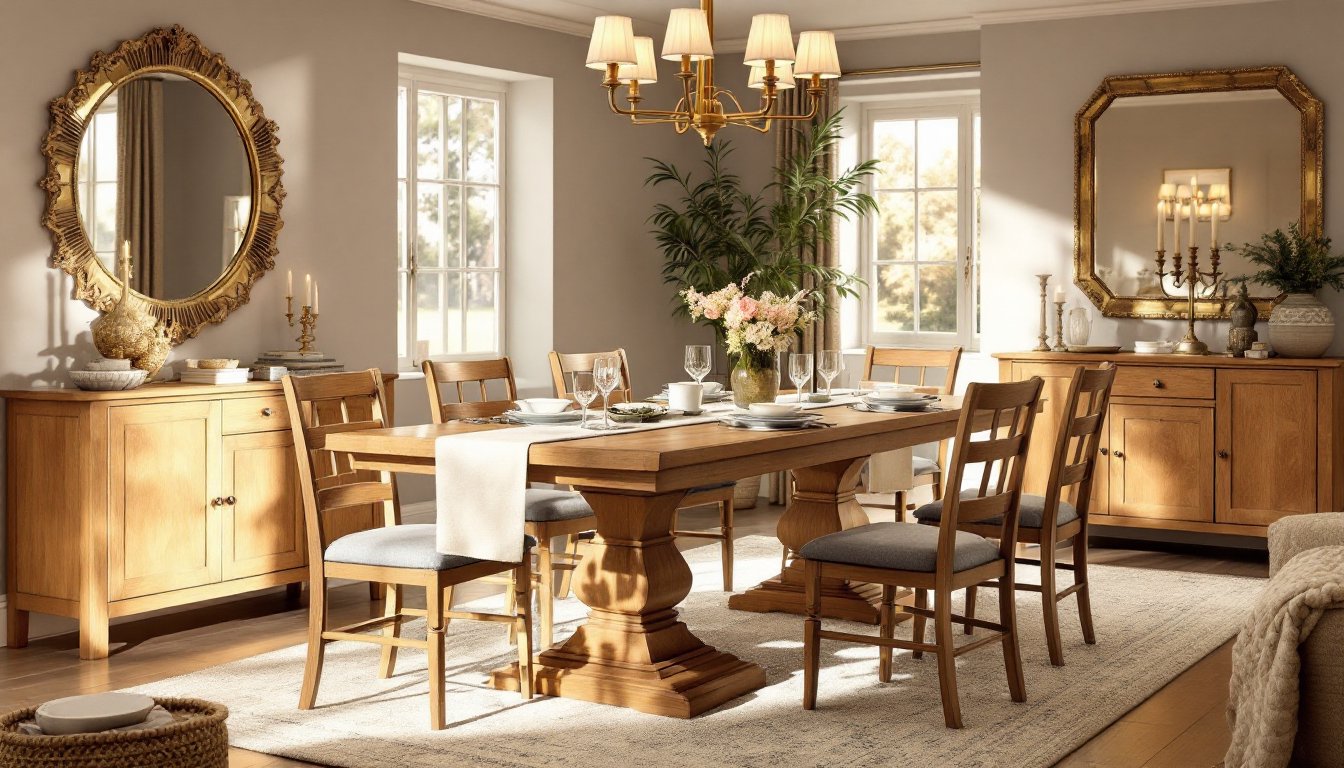
Oak’s pronounced grain pattern and warm honey to amber tones adapt to a range of design directions. The same solid oak table can feel traditional in a formal dining room with upholstered chairs and wainscoting, or rustic in a farmhouse kitchen paired with simple spindle-back seating and linen runner. You can stain oak darker for a contemporary or transitional look, or keep it natural for a Scandinavian or coastal aesthetic.
Red oak displays a more open grain with pronounced medullary rays, creating visual texture that works well in casual or eclectic spaces. White oak has a tighter, more uniform grain and naturally contains tannins that give it subtle gray-green undertones, qualities that appeal to those seeking a more refined or understated look. Both species take stain reliably, so if you prefer espresso, ebony, or gray-toned finishes, oak provides a solid foundation.
Types of Oak Dining Room Furniture to Consider
Dining Tables and Extensions
Oak dining tables range from simple, solid-slab designs to more elaborate pedestal or trestle bases. A standard dining height runs 29 to 30 inches, and comfortable spacing between the table edge and a chair seat is roughly 10 to 12 inches. A table that’s 36 to 42 inches wide accommodates place settings on both sides without guests reaching too far across to pass dishes.
Extension tables are particularly practical for oak: many traditional designs use a removable leaf system or sliding apron with butterfly or figure-eight fasteners that expand the table from, say, 60 inches to 78 or 96 inches when fully extended. Because oak is stable, extension mechanisms rarely bind or stick over time. If you’re considering a used or older oak table, check that the base isn’t warped and that any mechanical parts move smoothly, replacement leaves can be pricey, and mismatched wood tones between original and newer leaves may be visible.
Solid, quartersawn white oak tables, such as those found in antique quartersawn white oak dining table designs, showcase beautiful ray fleck patterns and offer exceptional durability. Standard flat-sawn oak is more affordable and equally hard-wearing: the difference is aesthetic and reflects the wood’s growth rings.
Chairs, Benches, and Seating Solutions
Oak dining chairs are typically constructed with a hardwood frame (the visible parts) and either a solid wood or plywood seat. If the seat will be upholstered, ensure the frame isn’t warped and that joints (where the front legs meet the apron, for instance) are tight, any flex indicates failing glue lines. A standard dining chair measures approximately 17 to 20 inches wide and about 16 to 18 inches deep: armchairs add roughly 4 to 6 inches in width.
Spindle-back and ladder-back styles remain popular because they’re lightweight, stackable, and visually open, useful if your dining room isn’t spacious. Upholstered seats or backs add comfort and allow you to introduce color and texture without refinishing the wood. Benches, whether backless or with a low rail, provide flexible seating, especially if you have young children or frequently host groups larger than your standard chair count. Oak benches are sturdy enough to serve double duty as entryway seating or a hallway piece.
Styling Oak Dining Furniture With Your Décor
Pairing oak furniture with your broader interior design requires thoughtfulness but isn’t complicated. Start by considering the dominant finish on your oak pieces. A natural, honey-toned table and chairs work beautifully with warm whites, creams, and soft earth tones, think pale green walls, beige linen, and vintage brass fixtures. This approach feels organic and is popular in farmhouse decor and country-style homes where natural wood tones anchor the aesthetic.
If you’ve stained your oak darker, cooler neutrals and jewel tones become more versatile. A charcoal or ebony oak table pairs well with slate gray walls, navy upholstery, and matte black or brushed bronze hardware. This gives the room a more formal or contemporary edge while the wood’s natural character prevents it from feeling sterile.
Wall color matters more than you might think. Medium to dark woods can overwhelm a small room painted a heavy color: conversely, very light, bright walls can make the oak feel isolated. Mid-tone walls, soft gray, warm taupe, or pale blue, provide balance. Textiles add personality: a table runner in linen, cotton, or jute complements oak’s natural aesthetic, while patterned upholstery on chairs introduces visual interest without fighting the wood.
Lighting is crucial. Oak grain shows beautifully under warm-toned bulbs (2700K color temperature): cool, clinical LED light can flatten the wood’s richness. A statement chandelier or pendant lights over the table become focal points and draw the eye upward, which is especially helpful if the dining room is part of an open floor plan.
Finally, don’t shy away from mixing finishes. A natural oak table with modern metal chairs and a contemporary light fixture reads as intentional, not mismatched. The consistency is oak: everything else can be playful. For detailed inspiration and project guidance, woodworking and furniture building tutorials offer practical approaches to designing and integrating pieces into your space.
Maintenance keeps oak looking its best. Dust regularly with a soft, lint-free cloth: for stubborn grime, use a slightly damp cloth and dry immediately. Avoid prolonged moisture exposure, hot dishes or spilled drinks left sitting will stain or swell the wood. Use coasters, trivets, and table pads to protect the finish. Once or twice yearly, apply a furniture wax or oil to restore sheen and protect the surface.
Final Thoughts
Oak dining room furniture delivers real value: durability that lasts decades, a grain and color palette adaptable to nearly any style, and the honest, timeless character that makes a house feel like a home. Whether you’re starting from scratch or refreshing your dining space, understanding oak’s strengths and styling possibilities positions you to make confident choices that you, and perhaps your children, will enjoy for years to come.