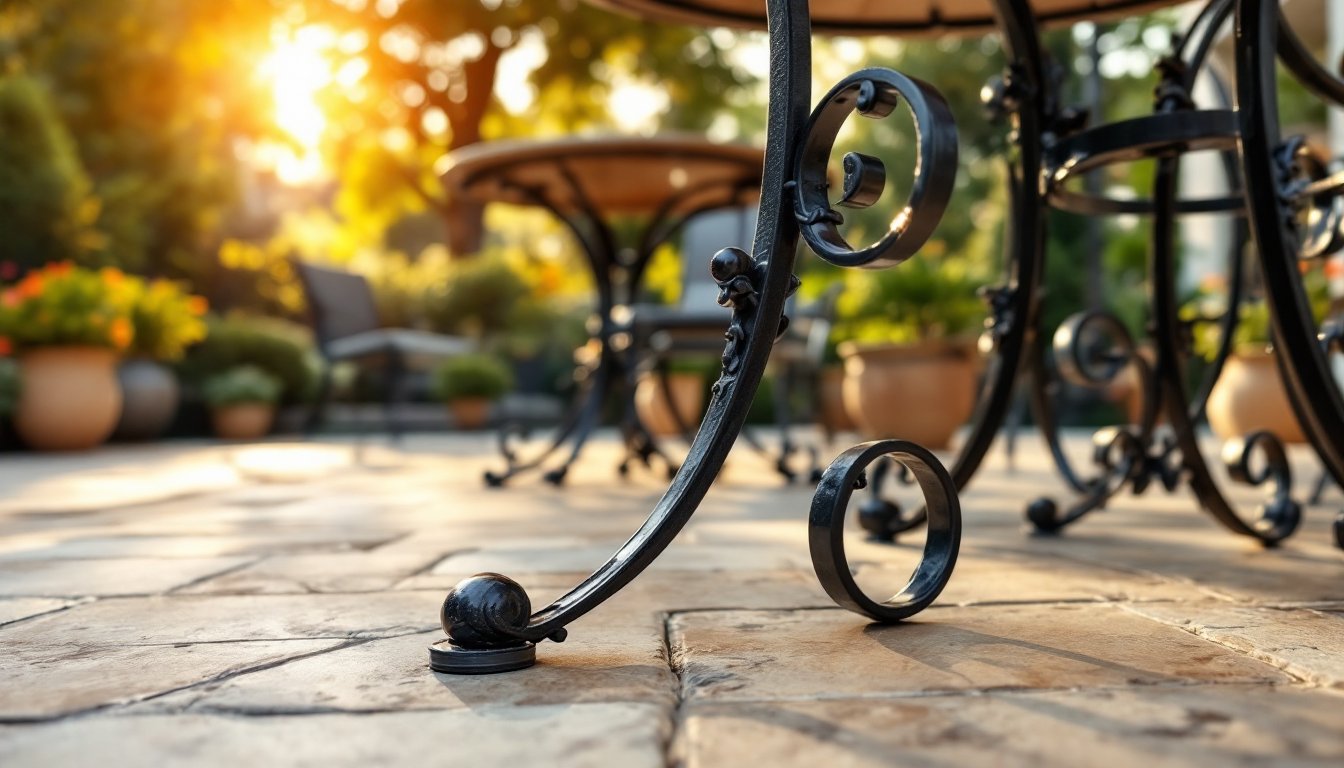
Wrought iron patio furniture is built to last, heavy, durable, and classically elegant. But there’s one detail that determines how long it actually survives the elements: the feet. Without proper protection, the bottom legs of your chairs, tables, and benches sit directly on concrete, wood, or stone, where moisture creeps in, rust takes hold, and finishes deteriorate. That’s where feet caps come in. These small but essential accessories protect the vulnerable leg ends, prevent water damage, minimize rust, and protect your deck or patio surface from staining and scratching. Whether you’re restoring an inherited set or buying new, understanding feet caps, and how to maintain them, is the difference between furniture that lasts a decade and furniture that becomes a yard sale casualty.
Table of Contents
ToggleKey Takeaways
- Wrought iron patio furniture feet caps prevent moisture damage, rust, and protect your deck or patio surface from staining and scratching by creating a barrier between metal legs and the ground.
- Choose between affordable rubber caps ($2–$8 per set) for casual spaces or premium metal caps with felt linings ($15–$40) for superior protection and aesthetics in wet or coastal climates.
- Installation takes less than 10 minutes and requires no tools—simply clean the leg foot, verify the fit, and slide the cap on snugly to ensure proper coverage.
- Inspect rubber caps seasonally and replace when cracked or loose, while metal feet caps with felt require annual checks and felt pad replacement every 2–3 years to maintain effectiveness.
- Measure your wrought iron leg diameter accurately (common sizes are 3/8, 1/2, and 5/8 inch) and consider your climate when selecting feet caps to prevent costly rust repairs.
- Regular maintenance including twice-yearly washing with mild soap and indoor winter storage in freeze-thaw climates significantly extends both feet cap lifespan and furniture durability.
Why Feet Caps Matter for Wrought Iron Patio Furniture
Wrought iron’s greatest strength is also its weakness: it’s heavy and durable, but the exposed metal at the base of each leg is where problems start. When a leg sits flush against concrete or pressure-treated wood, moisture accumulates in the tiny crevices where the foot meets the surface. Over months, that moisture works into the joint, corroding the iron from the inside out and breaking down any sealant or paint applied during manufacturing.
Feet caps serve multiple purposes. First, they create a moisture barrier between the metal and the surface below, keeping water from pooling or wicking up into the leg structure. Second, they distribute the furniture’s weight more evenly, reducing the stress on a single point of contact and preventing the leg from sinking slightly into softer materials like wood or composite decking. Third, they protect your patio or deck surface, bare metal legs will stain concrete and can leave rust marks or divots on wood.
Many homeowners also overlook that bare metal can scratch and damage expensive pavers, travertine, or sealed hardwood decks. A small rubber or felt-lined cap prevents that damage entirely. Even if your wrought iron is powder-coated or painted, the feet are often the first area to chip, exposing raw metal beneath.
Types of Feet Caps for Wrought Iron Furniture
Not all feet caps are created equal, and the right choice depends on your climate, usage, and aesthetic. Understanding the options helps you match the right protection to your furniture’s specific needs.
Rubber and Plastic Caps
Rubber feet caps are the most affordable and widely available option. They come in solid rubber or as rubber sleeves that slip over the leg foot. Standard rubber caps typically have a diameter range of 3/8 inch to 1 inch, matching common wrought iron leg sizes. The advantage is simplicity: you just slip them on, and they provide immediate moisture protection and surface protection for your patio.
Plastic caps offer similar benefits but are lighter and slightly less durable in UV exposure: they can become brittle over time in harsh sunlight. Rubber, by contrast, remains flexible and grips the leg more securely. Look for caps made from neoprene or EPDM rubber, which resist weathering better than cheaper PVC alternatives. Rubber caps typically cost $2 to $8 per set of four, making them the budget-friendly choice for most homeowners.
Metal and Felt-Lined Options
For a more refined look and superior surface protection, metal feet caps with felt linings are the premium choice. These are typically made from brass, stainless steel, or powder-coated steel, with a soft felt or felt-like material glued to the bottom surface. The felt absorbs vibrations, reduces noise when the furniture shifts, and provides a gentle contact surface that won’t scratch delicate flooring.
Metal caps with felt are especially popular for indoor-outdoor spaces or high-end furniture where aesthetics matter. They also offer better long-term durability in wet climates because the metal sleeve protects the leg joint more thoroughly than rubber alone. The felt linings do eventually wear down (typically after 2-3 years of regular use), but many metal caps feature replaceable felt pads, extending the cap’s lifespan. Expect to pay $15 to $40 per set for quality metal feet caps with replaceable felt. These work especially well when coordinating with outdoor entertaining ideas and curating a polished patio space.
How to Install Replacement Feet Caps
Installing feet caps is straightforward and requires almost no tools. Most people can outfit a set of four chairs in under 10 minutes.
What You’ll Need:
- Replacement feet caps (correct size for your furniture’s leg diameter)
- Dry cloth or rag
- Wire brush or soft-bristle brush (optional, for rust or debris removal)
Steps:
-
Inspect and clean the leg foot. Before installing new caps, flip your furniture over or tip it on its side to access the feet. Wipe each foot clean with a dry cloth to remove dust, debris, or loose corrosion. If there’s surface rust or old cap residue, use a soft-bristle brush or wire brush to gently clean the contact area. Don’t over-scrub, you’re just removing loose material, not polishing the leg.
-
Check the fit. Hold the cap against the foot to verify it’s the right size. The cap should slide on with slight resistance, snug enough to stay in place but not so tight you need a hammer or tools to install it. If it’s too loose, the cap will shift or fall off: too tight, and you risk cracking plastic or damaging the foot.
-
Slide the cap onto the foot. For rubber sleeves, squeeze slightly and slide the cap straight onto the foot end. For metal caps with felt, align the opening with the foot and slide it on. The cap should sit flush, covering the entire exposed metal end and any joints.
-
Verify alignment. Once all four caps are installed, set the furniture back on its feet and check that it sits level and stable. Uneven caps can cause wobbling. If one cap is too loose and shifts, remove it, check the foot diameter, and try a size up if needed.
Replacement is the same process in reverse: pull off the old caps and slide new ones on. If old rubber caps are stuck, warming them gently with a heat gun makes removal easier, but don’t overheat the surrounding metal. For metal caps with felt, check whether the felt pads are replaceable before discarding the entire cap, many quality brands sell felt pad kits separately, saving you money on replacements.
Maintenance Tips to Extend Feet Cap Lifespan
Feet caps aren’t set-and-forget, simple maintenance extends their life significantly and keeps your furniture protected year-round.
Rubber and plastic caps: Inspect them seasonally, especially before winter or the rainy season. Look for cracks, separations, or discoloration. Rubber can harden and lose grip over time: if a cap no longer fits snugly or is visibly cracked, replace it. In freezing climates, remove furniture from outside for the winter if possible, freeze-thaw cycles can degrade rubber and cause caps to pop off. At minimum, clear standing water from the feet after heavy rain.
Metal and felt-lined caps: Check felt pads annually. When felt becomes compressed, matted, or worn smooth, water can sit between the felt and the surface instead of being wicked away. Replace felt pads when they no longer feel soft and cushioned. If felt pads are replaceable, you can buy kits for $5 to $10 per set. For non-replaceable felt, plan on replacing the entire cap every 2-3 years depending on exposure.
Regardless of cap type, wash your patio furniture at least twice a year with mild soap and water, paying attention to the feet and legs. This removes mineral deposits, pollen, and other debris that can trap moisture. Dry thoroughly, letting water sit promotes rust underneath caps. If your furniture is regularly exposed to salt spray (coastal areas), rinse the feet after rain or misting with fresh water to prevent salt corrosion.
Store wrought iron furniture indoors over winter if you live in a freeze-thaw climate. Even with caps, prolonged exposure to freeze-thaw cycles accelerates rust development. If storage isn’t an option, cover the furniture with a breathable furniture cover (not plastic, which traps moisture) and ensure feet caps are in good condition before cold weather arrives.
Choosing the Right Feet Caps for Your Furniture
Selecting the right feet caps comes down to three factors: leg diameter, climate, and intended use.
Measure your legs accurately. The most common wrought iron leg diameters are 3/8 inch, 1/2 inch, and 5/8 inch. Measure across the foot with a caliper or ruler: if it falls between standard sizes, round to the nearest half-size and test the fit before buying a full set. Buying the wrong size is the most common installation mistake.
Consider your climate. In dry, mild climates with minimal freeze-thaw cycles, basic rubber caps are sufficient. In wet, coastal, or freeze-thaw climates, invest in metal feet caps with replaceable felt or high-quality neoprene rubber that resists UV and cold damage. The $20-30 difference per set is worthwhile insurance against rust damage that costs $100+ to repair.
Think about aesthetics and use. If your patio is a casual gathering space, rubber caps are invisible and practical. If you’re creating a formal outdoor room or have expensive finishes underfoot, metal feet caps with felt provide visible polish and better surface protection. For creative inspiration on coordinating furnishings, explore garden design ideas and patio styling that matches your furniture’s character.
Look for feet caps sold as replacement kits for your specific furniture brand or style. Many high-end wrought iron manufacturers (like Ballard Designs or Pottery Barn) sell matched replacement sets that ensure perfect fit and finish coordination. For generic furniture, measure carefully and buy from suppliers like Amazon, Home Depot, or specialty patio retailers that accept returns if the fit isn’t right. Don’t assume all 1/2-inch caps are identical, tolerances vary between manufacturers, so testing fit before a bulk purchase prevents frustration.