Wrought iron patio furniture sets have held their place in outdoor design for generations, and for good reason. They combine classical aesthetics with genuine durability, creating outdoor spaces that feel both elegant and livable. Whether you’re furnishing a small balcony or an expansive backyard, understanding what makes a quality wrought iron set worth the investment helps you choose pieces that’ll anchor your outdoor space for decades. This guide walks you through the essentials of selecting, maintaining, and styling wrought iron patio furniture.
Table of Contents
ToggleKey Takeaways
- A quality wrought iron patio furniture set can serve your outdoor space for 20+ years with proper maintenance, outlasting trendy alternatives like aluminum and composite materials.
- Inspect welds, joint quality, and finish application before purchasing—look for three-layer powder-coat finishes and smooth, consistent welds to ensure durability against rust and corrosion.
- Choose cushions with outdoor-grade fabric (like Sunbrella), closed-cell foam cores, and marine-grade zippers to prevent mildew and fading in a single season.
- Measure your patio and consider table base design before buying to ensure the wrought iron set fits your layout without overwhelming the space or limiting functionality.
- Establish a seasonal cleaning routine using mild soap and water, inspect annually for finish damage, and keep touch-up paint on hand to prevent rust from spreading.
- Style wrought iron furniture with natural-fabric cushions in jewel tones, climbing vines or plantings, and layered lighting to create visual interest and extend usability into evening hours.
Why Wrought Iron Remains a Top Choice for Outdoor Spaces
Wrought iron has outlasted countless trendy outdoor materials because it delivers on two fronts: strength and style. Unlike aluminum or plastic furniture that can feel temporary, wrought iron carries visual weight, it looks intentional and substantial. The material is forged by hand or machine, creating pieces with genuine structural integrity that can support substantial seating loads without wobbling or creaking.
The longevity factor matters too. A well-maintained wrought iron set can serve your patio for 20+ years, surviving weather swings, heavy use, and seasonal neglect better than most alternatives. Wrought iron doesn’t crack like composite materials, warp like wood, or fade as quickly as painted aluminum. It ages gracefully when properly cared for, developing a patina that many homeowners find more appealing than the original finish.
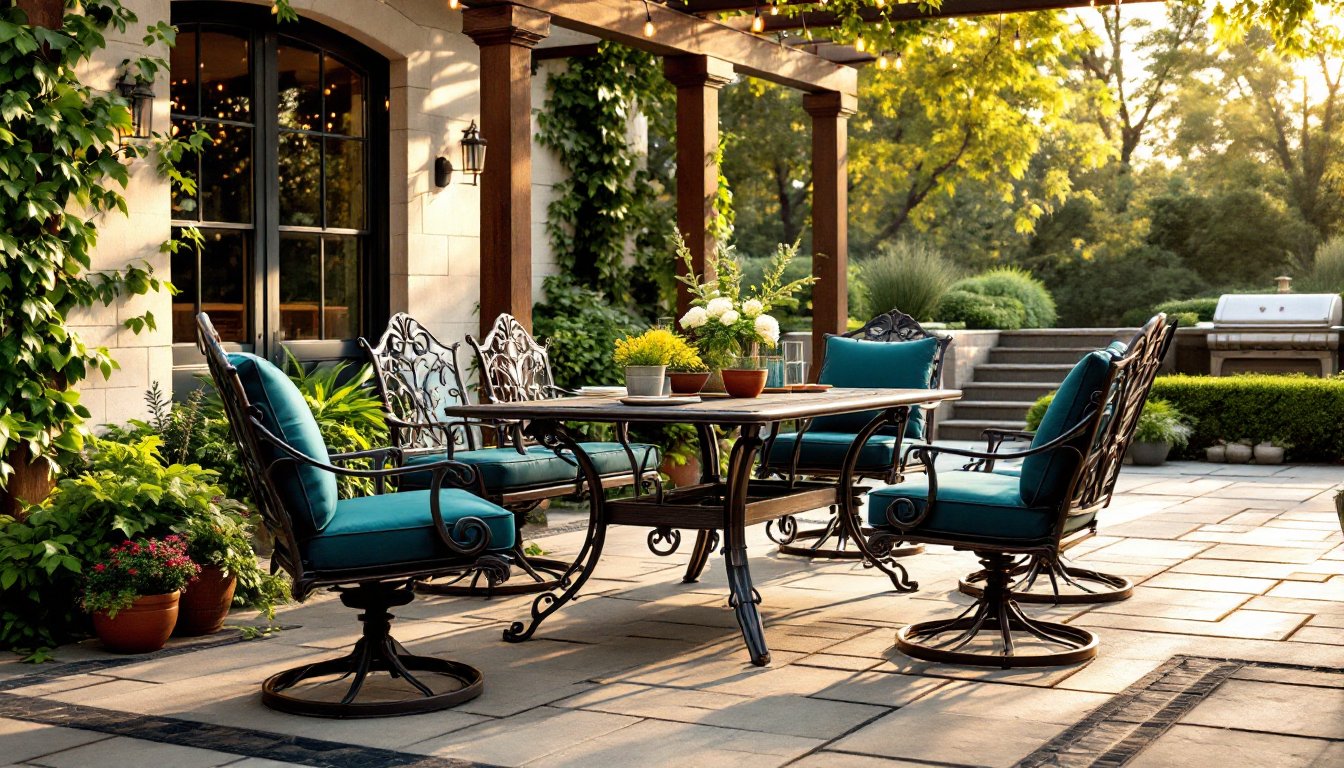
From a design perspective, wrought iron works across countless styles. Victorian-inspired scrollwork suits formal gardens and traditional homes. Clean geometric frames fit modern minimalist patios. Ornamental details in wrought iron can echo architectural elements of your house, creating visual continuity between indoors and out. The material’s dark finish (typically black or bronze) provides a neutral anchor that lets cushions, plantings, and hardscaping take the spotlight or pull them all together.
Essential Features to Look For in a Quality Set
Durability and Weather Resistance
Before purchasing any wrought iron set, inspect the welding and joinery. Look for smooth, consistent welds without gaps, cracks, or rough edges where frame pieces meet. Poor welds are an early warning sign that the furniture won’t withstand seasonal temperature swings or the expansion/contraction that follows. Run your hand along joints: they should feel solid and immobile.
The finish layer is your real protection against rust and corrosion. High-quality sets receive multiple coatings: typically a primer, base coat, and topcoat. Powder-coat finishes (applied electrostatically and baked on) outperform brush-applied paints for outdoor use because they’re more uniform, durable, and resistant to chipping. When comparing sets, ask the manufacturer or seller about their finish process. A three-layer powder coat is a solid baseline: anything less risks premature rust.
Cushions and padding matter equally. Outdoor-grade fabric (Sunbrella or equivalent performance materials) resists fading, mildew, and water absorption far better than indoor upholstery. Check that foam cores are closed-cell (water-resistant) rather than open-cell varieties that absorb moisture like a sponge. Zippers and thread should be marine-grade, and seams should be double-stitched. These details prevent cushions from becoming a maintenance burden within one season.
Design and Style Compatibility
Measure your patio before shopping. A five-piece set that looks modest in a showroom can overwhelm a modest deck. Account for foot traffic, door swings, and sight lines from inside your home. Wrought iron furniture makes a statement, so placement matters, cramming a large set into a tight space diminishes both the furniture’s visual impact and your usable patio space.
Consider the table base design. Some wrought iron sets use ornate pedestal bases that provide legroom for seating but limit where you can position chairs. Others use four-leg frames that allow you to slide chairs completely under the table, freeing up space when the set isn’t in use. Both work: the best choice depends on your layout and how you plan to use the space.
Arm design affects comfort and style. Ornamental arms can dig into rib cages or bump against larger guests, so sit in the chairs if possible before committing. Some homeowners prefer armless designs or sets with lower, more ergonomic arm heights. Frame geometry, whether it’s curved scrollwork or straight lines, should harmonize with your home’s exterior trim, roofline, and overall architectural vocabulary. Wrought iron’s permanence means you’ll live with it long enough for poorly matched styles to become a visual irritant.
Maintenance Tips to Keep Your Set Looking New
Wrought iron furniture is low-maintenance compared to wood or some finishes, but “low” doesn’t mean “none.” Establish a simple seasonal routine to keep your set looking new and prevent rust creep.
Start with regular cleaning. Once or twice a season, wash frames with mild soap and water using a soft-bristle brush to reach crevices where dirt and moisture accumulate. Dry thoroughly with a cloth or let air-dry in the sun. For stubborn spots or light surface oxidation, a mixture of white vinegar and water cuts through corrosion without damaging the finish. For salt-air environments or heavily soiled furniture, a pressure washer on low setting (below 1500 PSI) works, but keep the nozzle moving and avoid concentrating water on joints or crevices.
Inspect the finish annually, especially after winter. Look for chips, scratches, or spots where bare metal shows. Rust prevention is far easier than rust removal. If you find minor damage, touch it up with outdoor-grade metal paint or rust-inhibiting spray paint matched to your furniture’s original color. This one-step repair takes minutes and prevents oxidation from spreading. Keep a small can of touch-up paint on hand from the year you purchase.
Cushions need regular care too. Brush off debris weekly during the season and wipe with a damp cloth monthly. If cushions aren’t being used for extended periods (winter storage, vacation), store them indoors or in sealed, breathable bags to prevent moisture accumulation and mildew. Zipper cleaning with mild soap keeps them functioning smoothly. Many homeowners rotate cushions seasonally or every season to even out fading and wear patterns.
For long-term storage during harsh winters, consider covering the set with a high-quality furniture cover that allows airflow (breathable covers prevent trapped moisture). Some homeowners move sets into a garage or covered shed: this is ideal if space allows. If storing outdoors, position furniture where water drains away and airflow circulates around the frame.
Styling Your Patio With Wrought Iron Furniture
Wrought iron’s dark, neutral tone is a design asset. The material recedes visually, allowing outdoor design elements, plantings, hardscape materials, and accent colors, to become focal points. This works in your favor whether you’re aiming for a formal garden feel or relaxed cottage style.
When layering textiles, wrought iron pairs beautifully with natural fabrics. Linen and canvas cushions in neutral tones or soft colors echo the furniture’s established aesthetic. Saturated jewel tones, deep teals, forest greens, burnt oranges, create contrast without clashing. Patterned textiles (geometric, botanical prints, or subtle stripes) add visual interest without overwhelming the space, since the iron framework provides strong structural lines.
Planting schemes work with wrought iron in two directions. Climbing vines or tall potted plants near table bases soften hard edges and create enclosure. Alternatively, keeping sightlines clear through the furniture emphasizes its sculptural qualities. Low plantings or groundcovers around the base of seating areas integrate furniture into the landscape rather than making it feel parked in the middle of a patio.
Hardscape materials matter too. The best garden furniture sets from curated designers often emphasize how base materials interact with seating. Wrought iron suits stone or brick patios well: the dark metal echoes shadow and texture in masonry. On lighter surfaces like concrete or pavers, consider an overhead structure (pergola, shade sail, or retractable awning) to create visual breaks and define the seating zone. Outdoor living spaces thrive when furniture, hardscape, and shade work together, none standing isolated.
Lighting transforms wrought iron furniture at dusk. String lights, path lighting, or uplighting on nearby plants emphasize the furniture’s form and create atmosphere. Wrought iron’s sculptural qualities become even more pronounced in low light, casting shadows that add dimension to your patio. Garden design ideas often pair wrought iron seating with layered lighting strategies that extend the usability and appeal of outdoor spaces into evening hours.
Functional elements round out the setup. Outdoor side tables, a beverage cooler positioned nearby, or a weatherproof storage bench for cushions and throws eliminate friction in daily use. Access matters too, if getting to your seating area requires maneuvering around plants or deck stairs, you’ll use it less. Walkways and sight lines should feel intuitive.
Conclusion
A wrought iron patio furniture set is an investment that pays dividends in durability, timeless style, and reliable performance across decades of seasons. The upfront cost is higher than trendy alternatives, but the longevity and minimal maintenance demands make it genuinely economical over time. Focus on quality construction, proper finish application, and thoughtful placement within your outdoor space. With seasonal cleaning and prompt touch-ups, your wrought iron set will anchor your patio with both elegance and substance for generations to come.